

OEM Manufacturing + ODM Product Development
Sheungchak OEM & ODM Hydraulic Components Manufacturer
We manufacture and develop configurable hydraulic pumps, motors, power units, cylinders, valves and related parts for equipment manufacturers, distributors and hydraulic brands-from established OEM platforms to application-specific ODM product development.
OEM vs ODM Hydraulic Manufacturing: What Is the Difference?
OEM and ODM projects start at different stages. OEM manufacturing is the better fit when the product platform or specification is already defined. ODM development is used when the application requirements are known but the final hydraulic configuration still needs engineering, prototyping and validation.
OEM HYDRAULIC MANUFACTURING
Start from an Existing Product or Defined Specification
Sheungchak OEM programs use an established hydraulic platform, buyer specification or approved product configuration as the manufacturing basis. The project can then focus on application-specific configuration, product identification and repeat supply.
- Existing piston pump, gear pump or motor platforms
- Displacement, pressure and rotation configuration
- Shaft, flange and port customization
- Seal, material and finish options
- Logo, nameplate and private-label packaging
- Approved sample to repeat production
ODM HYDRAULIC PRODUCT DEVELOPMENT
Start from the Application and Develop the Product Configuration
Sheungchak ODM projects begin with equipment requirements such as hydraulic performance, installation space, interface, operating environment and control needs. Engineering support is used to convert those requirements into a prototype-ready product configuration.
- Application and duty-cycle analysis
- Hydraulic performance definition
- Component and interface selection
- CAD / Pro-E engineering support
- Prototype production and testing
- Design confirmation before batch manufacturing
Simple rule: choose OEM when you already know what product you want manufactured; choose ODM when you know what the equipment needs to achieve and want the manufacturer to participate in developing the final hydraulic product configuration.
OEM Hydraulic Component Customization Options
OEM customization is organized around the parameters that affect fit, hydraulic performance, durability and commercial presentation. The following options are common starting points for industrial and mobile hydraulic component programs.
| Product Family | Performance | Mechanical Interface | Materials / Sealing | Electrical / Control | Branding |
|---|---|---|---|---|---|
| Hydraulic Pumps | Displacement, pressure, flow, CW / CCW / bi-directional rotation | Keyed, splined or tapered shaft; SAE / ISO / DIN flange; BSP, NPT, SAE or metric ports | Cast iron or aluminum housing; NBR, FKM, PTFE or HNBR sealing options | Pressure compensation, load-sensing, manual or electro-hydraulic control on applicable piston pump platforms | Logo, nameplate, paint / finish, carton and private-label packaging |
| Hydraulic Motors | Displacement, torque, speed, rotation direction and operating pressure | Keyed / splined shaft, mounting flange, port orientation and thread standard | Cast iron / alloy construction, NBR / FKM seals and corrosion-protection finishes | Brake or control interfaces on applicable motor configurations | Custom color, logo, nameplate, label and packaging |
| Hydraulic Power Units | System pressure, flow rate, reservoir capacity and duty requirement | Tank shape, manifold layout, mounting arrangement and port configuration | Steel / aluminum reservoir options, seal and hose material selection | 12 / 24 VDC and common AC motor configurations; single-acting or double-acting circuit options | Branded label, wiring label, carton and OEM documentation |
| Hydraulic Cylinders | Bore, rod diameter, stroke, working pressure and movement speed | Clevis, flange, trunnion, pin or custom mounting; port position and thread | Carbon / alloy steel components, NBR / PU / FKM seal options and painted or plated surfaces | Position sensing or valve integration for applicable cylinder projects | Custom nameplate, color, model marking and packaging |
| Solenoid Valves | Flow, pressure range, normally open / normally closed function and spool configuration | BSP, NPT, SAE or metric ports; manifold or inline installation | Steel / cast iron / aluminum body options and common hydraulic seal materials | 12 / 24 VDC and common AC coil voltages; DIN connector options | Coil label, valve marking, logo and packaging |
| Hydraulic Parts | Dimensions and functional geometry according to drawing or approved sample | Threads, splines, keyways, holes, mounting patterns and mating surfaces | Carbon steel, alloy steel, stainless steel, cast iron, aluminum and application-specific materials | Electrical integration available when the part is supplied as part of an assembly | Part number, laser marking, label, bag / box and batch packaging |
Common hydraulic OEM interface standards include SAE / ISO / DIN mounting formats, BSP / NPT / SAE / metric ports, keyed / splined / tapered shafts, NBR / FKM / PTFE / HNBR seals, CW / CCW rotation and 12 / 24 VDC electrical configurations. Exact combinations are matched to the selected product series.
From Application Requirements to a Production-Ready Hydraulic Product
ODM development is intended for buyers who need more than a catalog configuration. Sheungchak combines hydraulic product experience, CAD / Pro-E engineering, prototype development and testing to convert equipment requirements into a manufacturable product.
Typical ODM starting information: equipment function, target pressure and flow, available installation space, mechanical interface, operating environment, control method and expected production volume.
Define the Hydraulic Duty
Pressure, flow, displacement, torque, speed, duty cycle and environmental requirements are translated into an engineering target for the new product configuration.
01 / APPLICATION DEFINITION
Select the Hydraulic Architecture
The product type, displacement range, control approach, reservoir / manifold arrangement or actuator configuration is selected according to the equipment function.
02 / CONCEPT CONFIGURATION
Fit the Product to the Equipment
Shaft, flange, mounting, port position, dimensions and installation envelope are coordinated so the component can integrate with the target machine.
03 / MECHANICAL INTEGRATION
Match Materials to Working Conditions
Housing material, seals, coatings and finishes can be adapted for temperature, corrosion, fluid compatibility and other operating conditions.
04 / MATERIAL & ENVIRONMENT
Build the Engineering Sample
A prototype is produced for new or substantially modified configurations so dimensions, assembly and hydraulic performance can be evaluated before production release.
05 / PROTOTYPE DEVELOPMENT
Validate the Product Configuration
Prototype results are used to verify pressure, flow, leakage, motion or torque performance as applicable, with configuration adjustments made before final approval.
06 / TEST & OPTIMIZE
Freeze the Approved Specification
The approved technical configuration, identification and packaging requirements become the reference for production and repeat orders.
07 / DESIGN CONFIRMATION
Move from Prototype to Batch Manufacturing
Once the product configuration is approved, the project moves into controlled manufacturing using the confirmed specification as the production basis.
08 / PRODUCTION TRANSFER
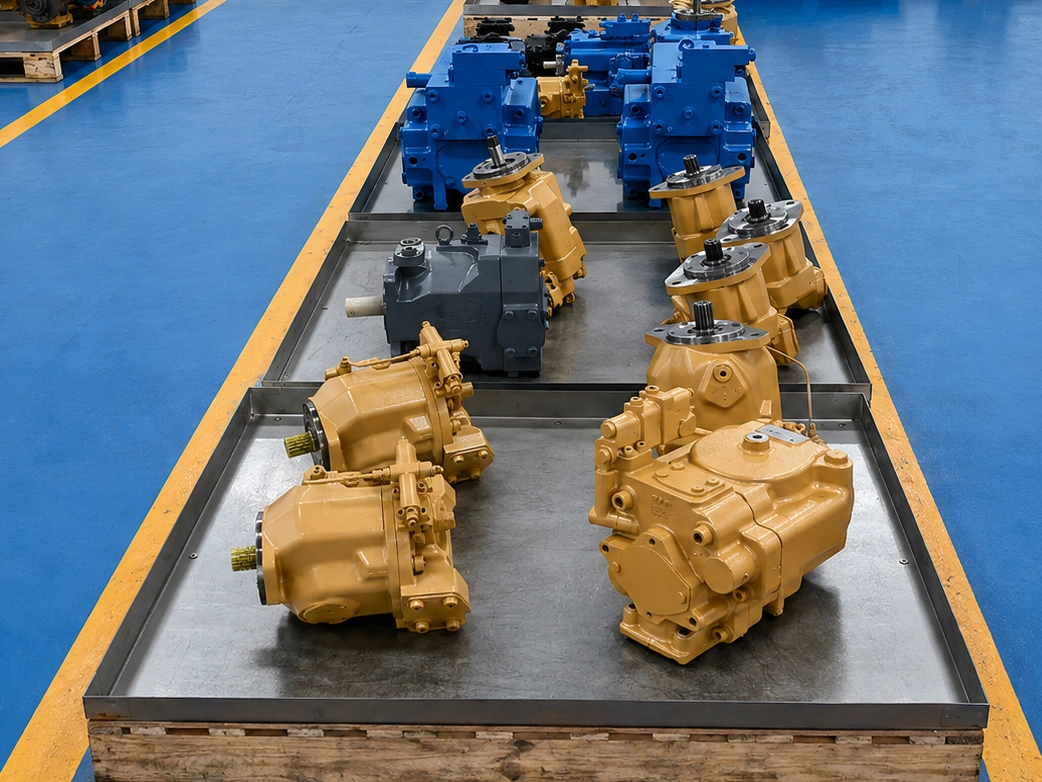
Hydraulic Platforms for Faster OEM Configuration
Not every project needs a completely new design. Sheungchak's existing hydraulic pump and motor platforms provide a practical base for OEM configurations where the core product architecture is already proven and the project mainly requires parameter, interface or branding changes.
Axial Piston Pumps
A4VSO, A2FO, A4VG, A10VSO, A11VO and related platforms
Gear Pumps
Group 1 / 2 / 3, AZPF, PLP20, PLP30 and related external gear pump families
Piston Motors
A2FM, A6VM, AA6VM and related axial piston motor platforms
Additional Hydraulic Components
Power units, cylinders, solenoid valves and hydraulic parts for OEM / ODM programs
Prototype Validation Before OEM / ODM Batch Production
New and modified hydraulic products are validated at the points that affect installation, hydraulic function and repeatability. The objective is to approve a stable product configuration before it becomes a recurring production item.
Dimensional Verification
Critical dimensions, mounting interfaces, threads, shaft geometry and mating features are checked against the approved drawing or product specification.
Pressure & Leakage Test
Hydraulic components are checked for pressure response, sealing performance and external leakage under the applicable test condition.
Flow / Speed / Torque Verification
Pumps, motors, power units and other applicable products are evaluated against the approved hydraulic operating requirements.
Sample & Specification Confirmation
After the prototype or configured sample is approved, the confirmed technical and branding specification becomes the production reference.
OEM projects typically move faster when an established product platform already matches most technical requirements. ODM projects normally include more engineering and prototype work because the manufacturer participates in defining the final product configuration.
Logo Printing
Your brand can be applied to the product body, label or approved branding position.
Nameplate
Custom model, brand and identification information can be prepared for OEM supply.
Customer Part Number
Private part-number systems can be used for distributor and equipment-manufacturer programs.
Packaging
Neutral, customer-branded, individual or bulk packaging can be matched to the sales channel.
Hydraulic Manufacturing for Equipment Manufacturers, Distributors and Brands
OEM and ODM services support different B2B purchasing goals-from integrating a configured component into machinery production to developing a differentiated hydraulic product for resale.
Equipment Manufacturers
OEM components configured around machine interfaces, pressure, flow and production requirements, with ODM support for new equipment platforms.
Hydraulic Distributors
Standard and configured hydraulic products supplied with private-label branding, customer part numbers and packaging.
Aftermarket Brands
OEM replacement product programs and ODM-developed product variations for differentiated brand portfolios.
System Integrators
Application-matched pumps, motors, valves and power units configured or developed around the target hydraulic system.
Common Questions About OEM and ODM Hydraulic Components
What is the difference between OEM and ODM hydraulic manufacturing?
OEM manufacturing starts from an existing product, buyer specification or established hydraulic platform and focuses on manufacturing, configuration and branding. ODM development starts from application requirements and includes more manufacturer-led engineering, prototype development and product configuration before production.
Which parameters can be customized on an OEM hydraulic pump?
Common hydraulic pump customization includes displacement, pressure, flow, rotation direction, shaft style, mounting flange, port standard, seal material, control type, product color, logo, nameplate and packaging. The final combination is selected according to the pump series and application.
What information is typically used to start an ODM hydraulic project?
ODM development normally begins with the equipment function, target pressure and flow, available installation space, required interfaces, operating environment, control method and expected production volume. These inputs are converted into an engineering configuration before prototype production.
Can Sheungchak develop hydraulic components from drawings or application requirements?
Yes. Drawing-based OEM projects and application-based ODM projects can be supported with CAD / Pro-E engineering, technical configuration, prototype production and hydraulic testing before batch manufacturing.
Can ODM projects include prototype development before mass production?
Yes. Prototype production is used for new or substantially modified configurations so fit, hydraulic performance and sealing can be checked before the product specification is released for batch manufacturing.
Can OEM products be supplied under our own brand?
Yes. Private-label options include logo printing, custom nameplates, customer part numbers, product colors, branded cartons, labels, barcodes and product documentation.
Start Your OEM or ODM Hydraulic Project
For OEM projects, send your product model, drawing or required configuration. For ODM projects, send your equipment application, target performance and installation requirements. Sheungchak can then match the project to an existing hydraulic platform or develop a new product configuration.