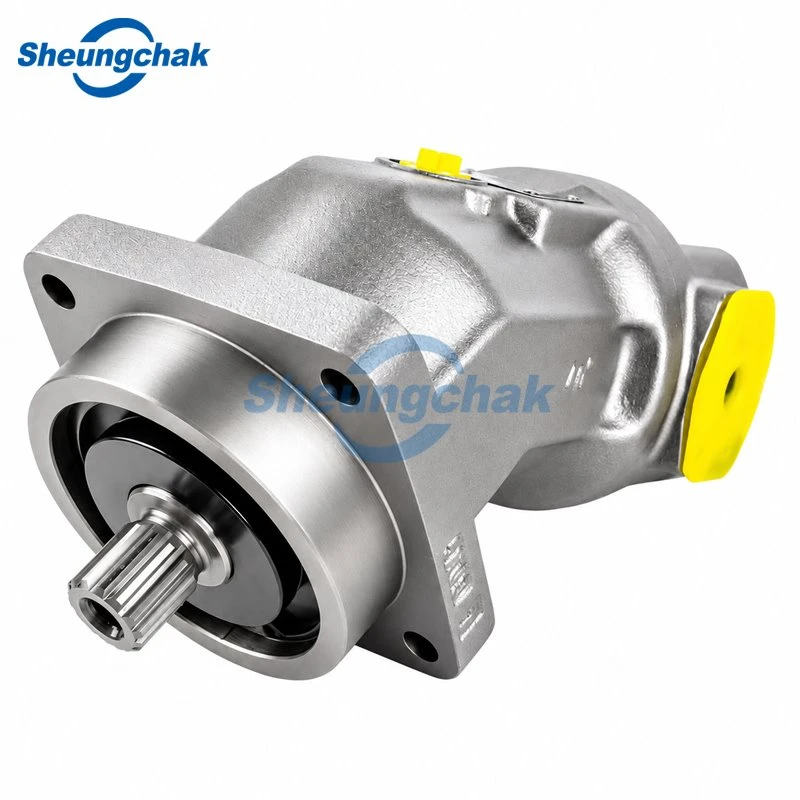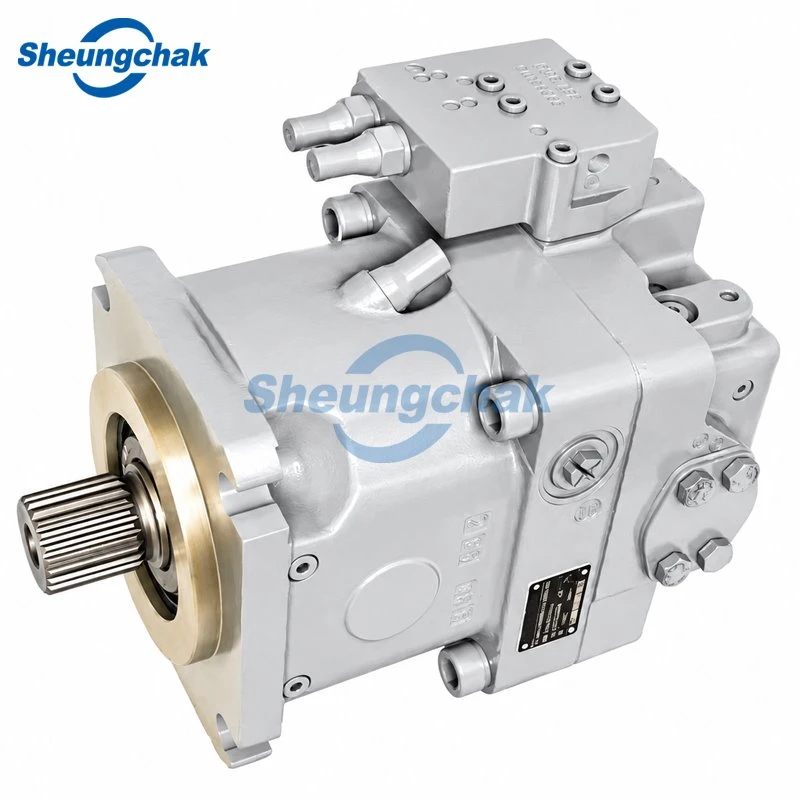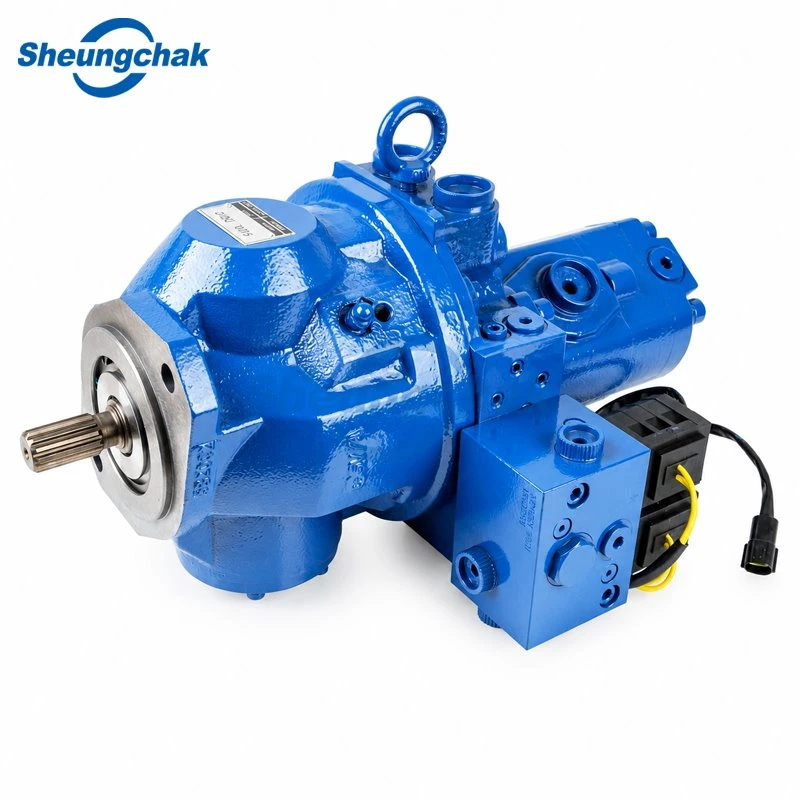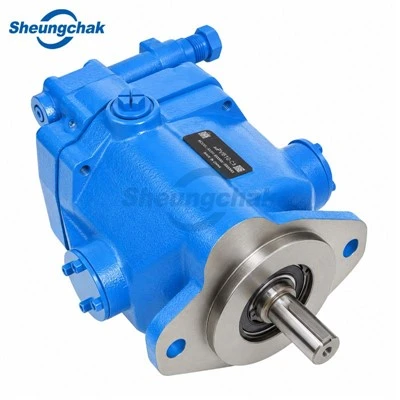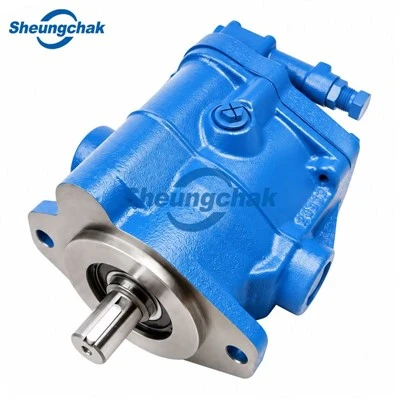

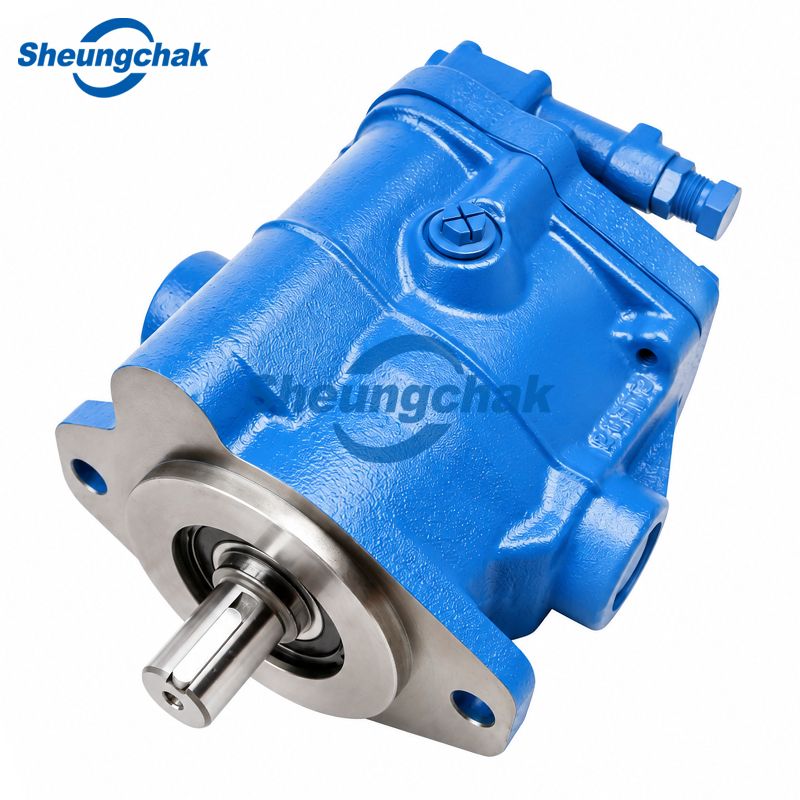
Guangdong Sheungchak Hydraulic Technology Co., Ltd. is one of the leading manufacturers and suppliers of pvh57 in China. With abundant experience, we warmly welcome you to buy high-grade pvh57 for sale here from our factory. All customized products are with high quality and competitive price. Contact us for quotation.
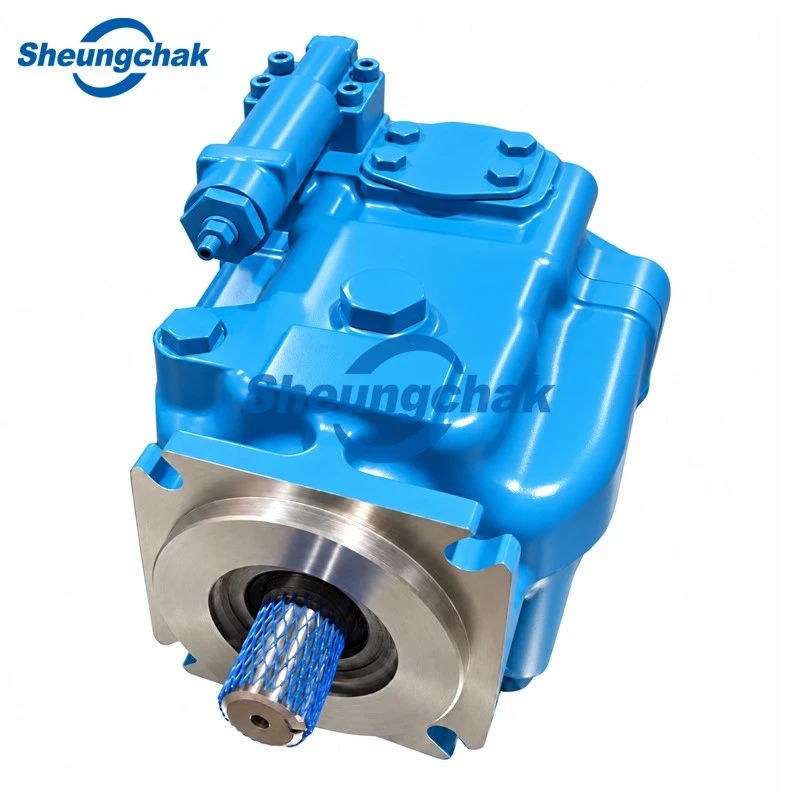
PVH57 is the 57.4 cc member of the PVH range. It is an open-circuit pump with an in-line piston group. You will find it on industrial power units, but also on mobile machines. Same family name. Not always the same build.
Here is a useful flow check. Displacement times 1800 rpm gives 103.3 L/min. The catalog test figure is nearer 98 L/min at 250 bar. Why the gap? A real pump leaks a little internally. That is normal. Hot oil, inlet restriction and wear take more away.
The long code matters more than many buyers expect. Take PVH057R01AA10B252000001AE1AB010A. It calls out right-hand rotation, an SAE C front, a 1.25-inch keyed shaft, side ports, pressure-and-flow control and an SAE A rear drive. Order from "PVH57" alone and any one of those points can be wrong.
Speed is another trap. An industrial PVH57 hydraulic pump is listed at 1800 rpm with zero gauge pressure at the inlet. Certain mobile arrangements go to 2400 rpm. We do not use the mobile number until the old code and inlet layout show that it belongs there.
For a replacement, photograph the whole nameplate first. Then the shaft, both work ports, control block and rear cover. Is there a piggyback pump? Include that coupling too. Five minutes with a phone usually saves a second shipment.
Features
- Flow changes at the swashplate; motor or engine speed can stay steady.
- The inlet is generous for a pump of this size, useful on mobile installations.
- At the pressure setting, a compensator pulls the pump back instead of wasting full flow.
- Load-sense versions listen to a signal line from the valve bank.
- Torque control backs off as pressure climbs. That helps an engine keep its speed.
- A maximum-displacement stop is available on selected codes.
- A rear drive can carry a second pump, provided the spline and torque are right.
[Talk to Our Engineers About Your Application →]
Technical Data
|
Item |
PVH57 Catalog Data |
|
Pump construction |
Open-circuit, in-line variable displacement axial piston pump |
|
Maximum geometric displacement |
57.4 cm³/rev (3.50 in³/rev) |
|
Industrial rated pressure, petroleum oil |
250 bar (3625 psi) |
|
Load-sensing pressure setting note |
Up to 280 bar (4060 psi) is listed for applicable load-sensing systems; confirm the exact control and duty |
|
Industrial rated speed at 127 mm Hg inlet vacuum |
1500 rpm |
|
Industrial rated speed at zero gauge inlet pressure |
1800 rpm |
|
Industrial rated speed with 0.48 bar inlet boost |
1800 rpm |
|
Mobile rated speed at zero gauge inlet pressure |
2400 rpm |
|
Theoretical flow at 1800 rpm |
Approx. 103.3 L/min (27.3 US gpm), before volumetric loss |
|
Typical industrial effective flow at 1800 rpm |
Approx. 98 L/min (26 US gpm) at rated pressure under catalog conditions |
|
Typical mobile effective flow |
Approx. 134 L/min (35 US gpm) at 2400 rpm, 250 bar and zero gauge inlet pressure |
|
Approximate dry mass |
30–36 kg (66–79 lb) basic; 31–37 kg (68–82 lb) with SAE A thru-drive |
|
Optimum oil viscosity |
16–40 cSt (80–180 SUS) |
|
Common front mounting |
SAE J744 four-bolt C; shaft option must be read from the complete code |
|
Common catalog shaft example |
31.8 mm (1.25 in) straight keyed shaft with 56 mm (2.20 in) projection |
|
Shaft rotation |
R clockwise or L counter-clockwise, viewed from the shaft end |
|
Main-port arrangement |
Multiple SAE flange combinations and locations; the two-letter port code must match |
|
Petroleum-oil inlet-temperature reference |
Up to 93 °C (200 °F), subject to viscosity and system limits |
|
Alternate-fluid pressure guidance |
Polyol ester 230 bar; water glycol 172 bar; high-water-base fluid 155 bar |
Treat 103.3 L/min as arithmetic, not a test promise. Hose size, oil temperature, suction pressure and the control setting all show up on the flow meter.
[Request Quote for Your Displacement & Control Type →]
How It Works
The shaft turns a barrel full of pistons. Each slipper runs on the tilted face of the swashplate. One half of the turn fills a piston bore; the other half pushes that oil to the outlet. More plate angle means a longer stroke. Longer stroke means more oil per turn.
A bias mechanism wants the plate on stroke. The control piston pushes the other way. Open a machine valve and this variable displacement piston pump supplies flow. Close the valve and the plate comes back toward neutral. The engine is no longer asked to drive full flow over the relief during a hold.
What tells the control to move? That depends on the code. A basic compensator watches outlet pressure. A load-sense control also watches the small signal line. A torque control looks after the engine as pressure rises. None of them replaces the case drain or the main relief valve.
Model Range
|
PVH57 Version / Code |
Control or Configuration |
Main Selection Point |
|
PVH057-A |
Pressure compensator |
Confirm the pressure code, rotation and valve-plate duty |
|
PVH057-B |
Pressure and flow compensator |
Match the load-sense margin and signal-line arrangement |
|
PVH057-D |
Pressure compensator with torque sensing |
Torque setting must suit the prime mover |
|
PVH057-E |
Pressure and flow compensator with torque sensing |
Combines load sensing and torque limitation |
|
PVH057-G |
IC pressure compensator |
Check the IC circuit and external valve arrangement |
|
PVH057-H |
IC pressure and flow compensator |
Requires the correct load-sense and IC plumbing |
|
PVH057-J |
IC pressure and flow control with torque sensing |
Verify all three control functions before substitution |
|
PVH057-K / L |
Electronic displacement control, with or without shuttle valve |
Electrical command and hydraulic circuit must both match |
|
PVH057-N |
Pressure and flow control with unloading valve |
Check unload and reset settings from the old code |
|
PVH057 thru-drive |
SAE A rear adapter and output shaft options |
Verify coupling spline, rear-pump torque and port clearance |
These are control families, not complete order numbers. The rest of a Vickers PVH57 code covers rotation, shaft, front flange, work ports, drain, seals, stops and design details. Read it all.
Applications & Industries
A PVH57 is often chosen when the circuit sits around the 100 L/min class and a larger frame would be clumsy. These five uses are common starting points. The actual choice still follows pressure, cycle time, oil and suction conditions.

Construction Machinery

Agricultural Machinery

Material Handling
Drilling Equipment

Mobile Cranes
|
Industry |
Equipment Examples |
What the Pump Does |
|
Construction Machinery |
Mid-size excavators, compact wheel loaders, trenchers |
Runs implement movement, then backs off when the valve bank is at rest. |
|
Agricultural Machinery |
Self-propelled harvesters, forage equipment, large sprayers |
Feeds the header and auxiliary circuits as their demand rises and falls. |
|
Material Handling |
Telehandlers, rough-terrain forklifts, container-handling attachments |
Lifts and positions the load. A load-sense build avoids pouring unused oil away. |
|
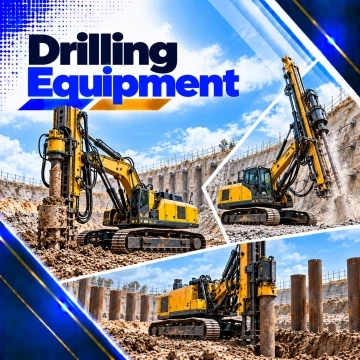
Drilling Equipment |
Compact crawler drills, anchor rigs, small pile drivers |
Drives feed, clamp and rotation-support functions while ground resistance changes. |
|
Mobile Cranes |
Truck-mounted cranes, small rough-terrain cranes, service cranes |
Sends oil to boom, outrigger and winch-support circuits from one pump. |
About Us
SheungChak builds hydraulic piston pumps, motors and replacement parts under our own OEM production program. The PVH57 hydraulic pump supplied from us is produced as a SheungChak product.
Small pumps can actually be annoying replacement jobs. There is less room to hide a mistake. Wrong rotation and A/B swap. Wrong shaft. Wrong compensator. A 0.75-inch shaft can still be wrong if the key or projection does not match.
Our usual check is quick: nameplate, shaft photo, rear ports, controller side. For an old unit with no readable code, send the pilot diameter too. Around 82.5 mm immediately tells us a lot.
Factory experience: 20+ years
Main products: Piston pumps, piston motors and hydraulic replacement components
Main markets: Europe / South America / Middle East / Southeast Asia / Africa
MOQ: 1 PC
Sample orders: 1 PC
Normal lead time: 1-2 days
OEM support: Drawing check, code matching, dimensional verification and batch production.

Certifications
Certificate name
Certificate name
Certificate name
Certificate name
Certificate name
Our Factory & Quipment


cooperative partner
We are looking for a cooperative partner to expand our business.










FAQ Display Content
Q: What is the displacement of a PVH57 hydraulic pump?
A: 57.4 cm³/rev, or 3.50 in³/rev. The 057 tells you the size. It does not tell you the shaft, ports or control.
Q: How much flow does PVH57 produce at 1800 rpm?
A: On paper, 57.4 cc times 1800 rpm is 103.3 L/min. The catalog test is about 98 L/min at 250 bar. For a field reading, allow for oil temperature and pump condition as well.
Q: Is PVH57 rated for 250 bar?
A: Yes, for the industrial petroleum-oil arrangement: 250 bar (3625 psi). Water glycol and some other fluids mean a lower number. A high control setting is not permission to ignore the pump rating.
Q: Can PVH57 run above 1800 rpm?
A: Some can. The mobile table shows 2400 rpm at zero gauge inlet pressure. An unknown industrial pump should not be run at that speed just because the frame looks the same.
Q: What is the difference between PVH57 and PVH63?
A: PVH57 is 57.4 cc and is the standard-bore choice. PVH63 is the 63.1 cc over-bore partner. More displacement, but a lower listed pressure rating. They share a frame; they are not a straight swap.
Q: What does controller code B mean on a PVH pump?
A: B is pressure-and-flow control. In everyday terms, it is the load-sense arrangement. Check the little signal port and the margin code, not only the main pressure setting.
Q: Can left-hand and right-hand pumps be exchanged?
A: No. R and L are different builds, read while looking at the shaft. Getting this wrong is not a hose-change problem; the pump timing is different.
Q: Does every PVH57 have a thru-drive?
A: No. Many end with a plain rear cover. For a piggyback pump, check the adapter, output spline, coupling length and permitted torque.
Q: Why can a new PVH57 be noisy?
A: Start at the inlet. A small hose, dirty strainer or air leak is common. Then check speed, coupling alignment and the case drain. A new pump can sound terrible when the installation is starving it.
Q: Is this a genuine Vickers PVH57 pump?
A: No. It is a compatible pump made by SheungChak. Vickers, Eaton and Danfoss are reference names for the original series.
Q: What information is needed for a PVH57 replacement quote?
A: Send the complete code, old part number, quantity and delivery country. Photos we need: nameplate, shaft, work ports, control and rear face. If the tag is unreadable, add shaft and pilot measurements.
Vickers, Eaton and Danfoss are trademarks of their respective owners. The names are used only for product identification and replacement reference. SheungChak is not affiliated with or endorsed by those trademark owners unless a quotation states otherwise.
[Send your PVH57 nameplate for a replacement check (/contact-us) →]
Hot Tags: pvh57, China pvh57 manufacturers, suppliers, factory, A10VSO, A4VG71, AP2D36, hydraulic pump, K3V112, K3V112DT