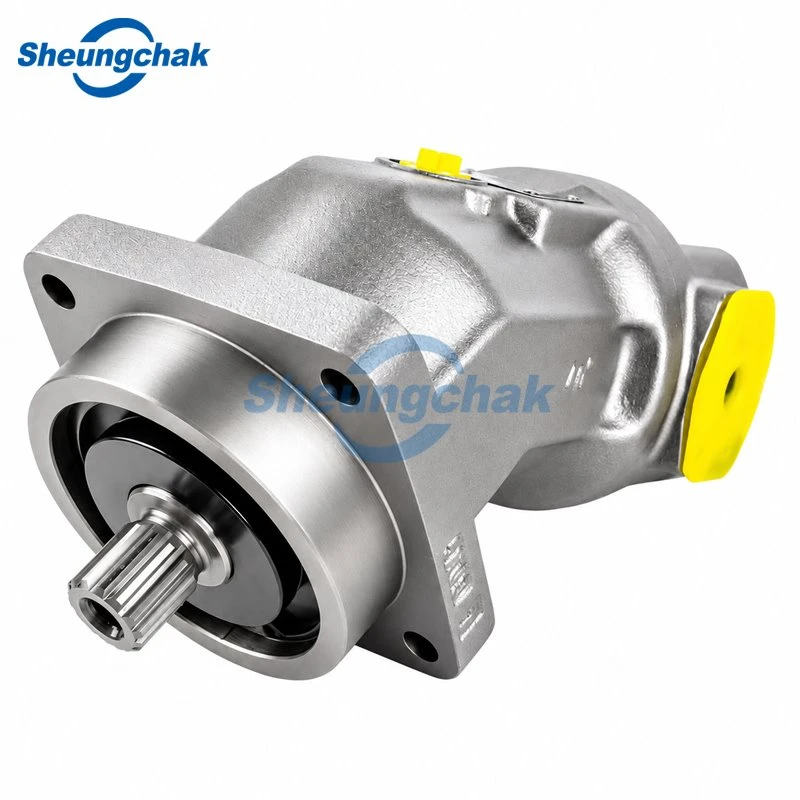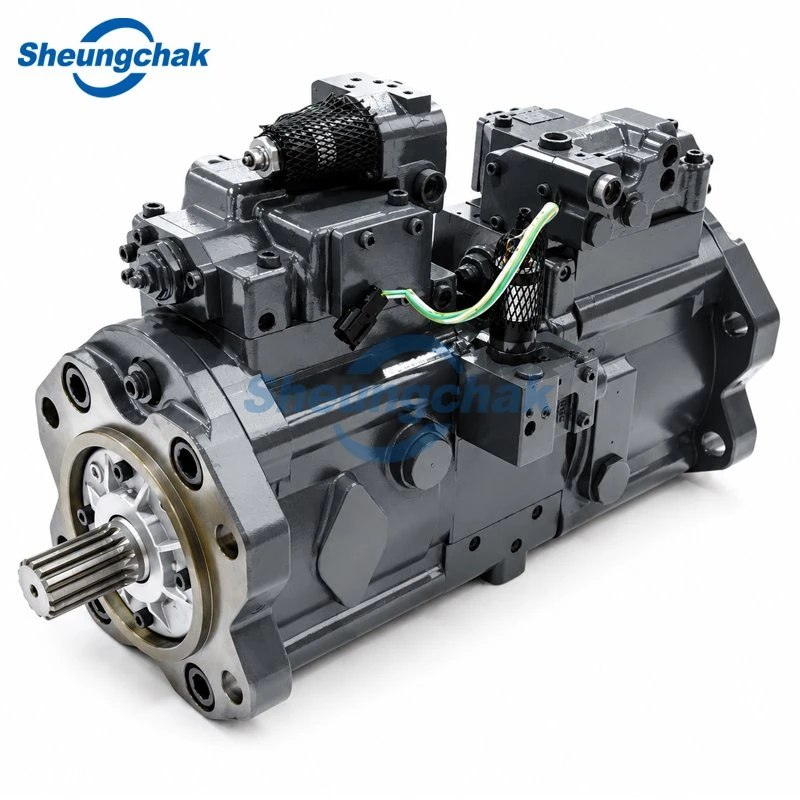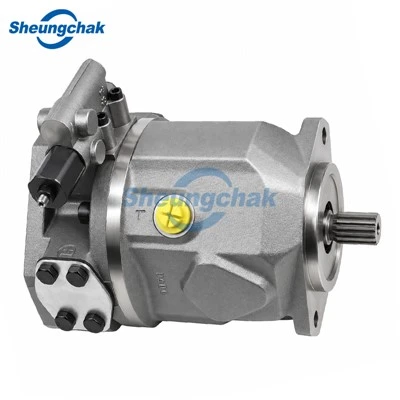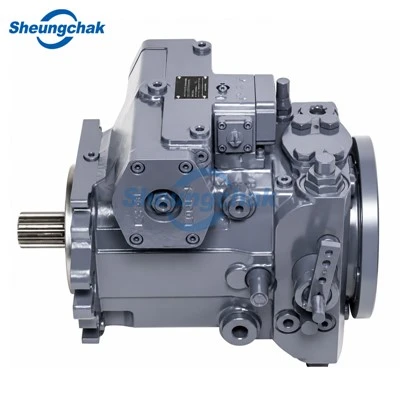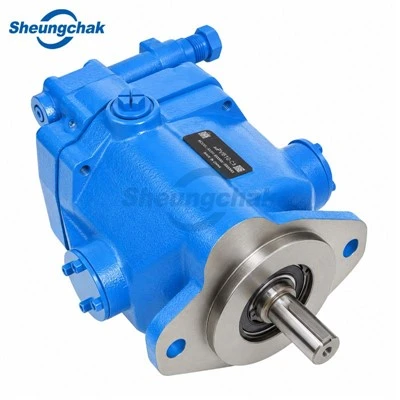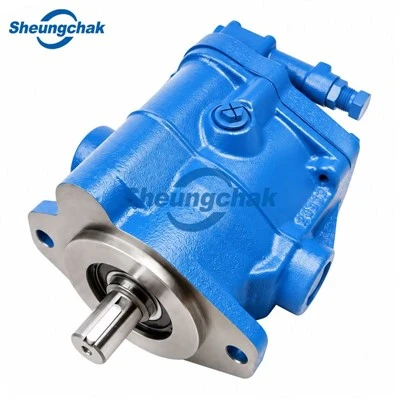

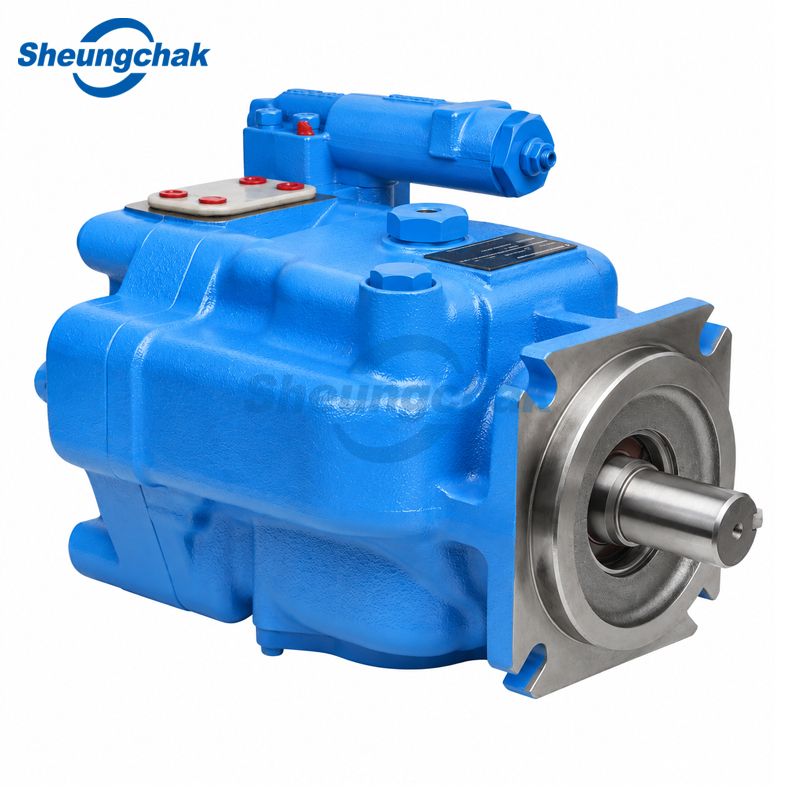
Guangdong Sheungchak Hydraulic Technology Co., Ltd. is one of the leading manufacturers and suppliers of pvh74 in China. With abundant experience, we warmly welcome you to buy high-grade pvh74 for sale here from our factory. All customized products are with high quality and competitive price. Contact us for quotation.

PVH74 is one of those sizes that makes sense after you have dealt with a few PVH machines. A 57 may leave the cylinder a little slow. A 98 can ask too much of the motor, inlet line or available space. The 74 sits between them at 73.7 cc per turn.
We still do the rough calculation on every inquiry. At 1800 rpm it comes to 132.7 L/min. Do not write that number on the machine sheet as delivered flow. The catalog test is nearer 125 L/min at 250 bar, and a used pump may show less once the oil is hot.
There are two common ways of writing the size. People say PVH74; the plate usually says PVH074 inside a much longer string. Here is a real catalog-style example: PVH074R02AA10B25200000100100010A. One changed character can mean the other rotation, another shaft or a different controller. We quote the string, not the first six characters.
A photo of the front face is useful, but it is not the whole check. Turn the old unit around. We want to see the suction flange, pressure port, drain, controller and rear cover. It is quite possible for two right-hand 74 pumps to look alike at the shaft and then disagree at the hoses.
If the plate has disappeared, measure rather than guess. For a PVH74 hydraulic pump, shaft diameter and projection come first. Add the pilot diameter and bolt pattern. A ruler held at an angle in a photograph is rarely accurate enough.
Key Features & Benefits
- Variable flow comes from the swashplate, not a change in drive speed.
- At cut-off pressure, the compensator shortens the stroke instead of dumping full delivery.
- The B version needs the small load-sense line from the valve bank.
- Torque control sacrifices some flow when pressure climbs. That can stop an engine from lugging down.
- IC versions belong with the matching external-control circuit.
- Some codes have a mechanical stop for maximum displacement.
- Shaft, front mount and port group must be read separately. "PVH74" does not answer any of them.
[Talk to Our Engineers About Your Application →]
Technical Data
|
Item |
PVH74 Catalog Data |
|
Pump type |
Variable displacement, in-line axial piston, open circuit |
|
Maximum displacement |
73.7 cm³/rev (4.50 in³/rev) |
|
Industrial rated pressure on petroleum oil |
250 bar (3625 psi) |
|
Applicable load-sensing setting reference |
Up to 280 bar (4060 psi) for a correctly specified load-sensing system |
|
Industrial speed at 127 mm Hg inlet vacuum |
1500 rpm |
|
Industrial speed at zero gauge inlet pressure |
1800 rpm |
|
Industrial speed at 0.48 bar inlet boost |
1800 rpm |
|
Mobile speed at 127 mm Hg inlet vacuum |
1850 rpm |
|
Mobile speed at zero gauge inlet pressure |
2200 rpm |
|
Mobile speed at 0.48 bar inlet boost |
2750 rpm |
|
Theoretical delivery at 1800 rpm |
Approx. 132.7 L/min (35.1 US gpm), before volumetric loss |
|
Typical industrial effective flow at 1800 rpm |
Approx. 125 L/min (33 US gpm) at rated pressure |
|
Typical mobile effective flow |
Approx. 156 L/min (41 US gpm) at 2200 rpm and catalog test conditions |
|
Approximate basic-pump dry mass |
39–45 kg (86–99 lb), depending on control |
|
Approximate SAE A thru-drive dry mass |
42–48 kg (93–106 lb) |
|
Preferred operating viscosity |
16–40 cSt (80–180 SUS) |
|
Typical front interface |
SAE C four-bolt mounting; keyed and splined choices are listed |
|
Direction |
Clockwise R or counter-clockwise L, observed from the shaft end |
|
Alternate-fluid maximum-pressure references |
230 bar polyol ester; 172 bar water glycol; 155 bar high-water-base fluid |
The speed columns are easy to misuse. A mobile valve plate and a healthy inlet are needed for the mobile figures. Do not take a boosted-inlet speed and run it with suction vacuum.
[Request Quote for Your Displacement & Control Type →]
How It Works
The drive shaft turns a barrel of pistons. Their slippers run on the angled swashplate. During one half-turn a bore fills from the inlet; during the other it empties into the pressure port. The barrel keeps turning, so the outlet sees a steady stream rather than separate shots of oil.
Plate angle decides piston stroke. Full angle gives close to 73.7 cc per turn. Move the plate toward neutral and the stroke becomes shorter. This is how a variable displacement hydraulic pump cuts delivery without slowing the engine.
The controller moves that plate. An A control watches outlet pressure. A B control also compares the load-sense line. Torque control steps in when the engine is being asked for too much. Whichever version is fitted, it still needs clean oil, a direct case drain and an inlet large enough for the speed.
Model Range
|
PVH074-A |
Pressure compensator |
Read pressure code and displacement-stop choice |
|
PVH074-B |
Pressure and flow compensator |
Check load-sense margin, bleed arrangement and pilot connection |
|
PVH074-D |
Pressure control with torque sensing |
Match the torque value to the motor or engine |
|
PVH074-E |
Pressure/flow control with torque sensing |
Confirm load-sense and torque settings together |
|
PVH074-G |
IC pressure control |
External IC valve circuit must agree with the original |
|
PVH074-H |
IC pressure and flow control |
Inspect both remote-pressure and signal-line plumbing |
|
PVH074-J |
IC pressure/flow plus torque sensing |
Not interchangeable on control letter alone |
|
PVH074-K |
Electronic displacement control |
Verify command signal, connector and fail position |
|
PVH074-L |
Electronic displacement control with shuttle valve |
Shuttle arrangement is part of the hydraulic match |
|
PVH074-N |
Pressure/flow control with unloading valve |
Unload and reset settings must be copied from the old build |
Vickers PVH74 or PVH074-B gets us into the right family. It does not finish the job. Rotation, shaft, port group, settings and design suffix still have to be read.
Applications & Industries
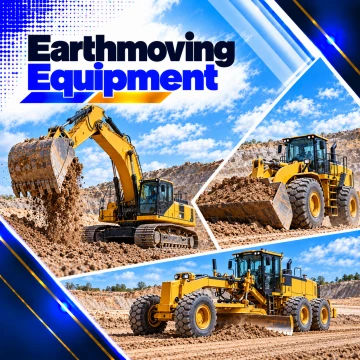
A 74 is useful when the machine needs more than the 57 can comfortably supply but a 98 is unnecessary. The five groups below are real open-circuit uses; the final code still follows the machine, not the picture.
Earthmoving Equipment
Quarry & Crushing

Mobile Cranes
Concrete Equipment

Forestry Machinery
|
Industry |
Equipment Examples |
What the Pump Does |
|
Earthmoving Equipment |
Excavators, wheel loaders, trenchers |
Feeds boom, bucket and attachment circuits, then backs off when the valves close. |
|
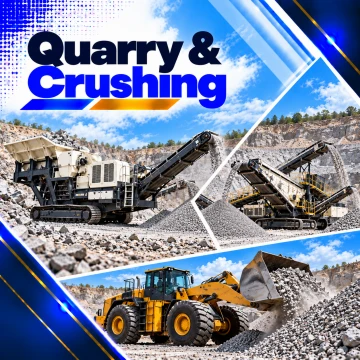
Quarry & Crushing |
Mobile crushers, screeners, aggregate feeders |
Runs conveyors, adjustment cylinders and auxiliary drives through a dusty stop-start day. |
|
Mobile Cranes |
Rough-terrain cranes, truck cranes, telescopic handlers |
Supplies boom, outrigger and winch-support functions from one pressure-limited pump. |
|
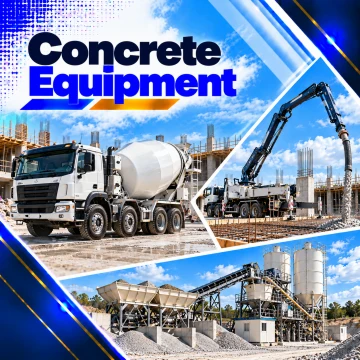
Concrete Equipment |
Concrete pump trucks, placing booms, batching-plant hydraulics |
Moves cyclic cylinders and the boom, then destrokes while the operator waits. |
|
Forestry Machinery |
Harvesters, forwarders, log loaders |
Serves grapple, boom and head functions that jump between fast movement and pressure hold. |
About Us
SheungChak builds hydraulic piston pumps, motors and replacement parts under our own OEM production program. The PVH74 hydraulic pump supplied from us is produced as a SheungChak product.
Small pumps can actually be annoying replacement jobs. There is less room to hide a mistake. Wrong rotation and A/B swap. Wrong shaft. Wrong compensator. A 0.75-inch shaft can still be wrong if the key or projection does not match.
Our usual check is quick: nameplate, shaft photo, rear ports, controller side. For an old unit with no readable code, send the pilot diameter too. Around 82.5 mm immediately tells us a lot.
Factory experience: 20+ years
Main products: Piston pumps, piston motors and hydraulic replacement components
Main markets: Europe / South America / Middle East / Southeast Asia / Africa
MOQ: 1 PC
Sample orders: 1 PC
Normal lead time: 1-2 days
OEM support: Drawing check, code matching, dimensional verification and batch production.

Certifications
Certificate name
Certificate name
Certificate name
Certificate name
Certificate name
Our Factory & Quipment


cooperative partner
We are looking for a cooperative partner to expand our business.










FAQ Display Content
Q: Is PVH74 the same as PVH074?
A: Yes. Both describe the 73.7 cc size. PVH074 is the padded form found in the long code; PVH74 is what most workshops say.
Q: What is the theoretical flow at 1800 rpm?
A: 132.7 L/min on paper. The catalog test is closer to 125 L/min at rated pressure. That second figure is the better one for a realistic comparison.
Q: What pressure can a PVH74 run?
A: The industrial petroleum-oil rating is 250 bar (3625 psi). Some control literature lists a higher load-sense setting. That is not a new continuous rating for every pump and hose in the circuit.
Q: Can a PVH74 replace a PVH81?
A: No direct swap. PVH81 is 81.0 cc and belongs to the over-bore pressure class. Check required flow, pressure and the complete build before considering it.
Q: Which rotation does the letter R indicate?
A: Clockwise, while looking at the shaft. L means counter-clockwise. Looking from the rear reverses what your eye tells you.
Q: What is the difference between controller A and B?
A: A is pressure compensation. B adds the load-sense function. On a B pump, the small signal port and margin setting matter just as much as the large work ports.
Q: Can PVH74 use a splined shaft?
A: Yes. There are keyed and splined choices. For a spline, give us the tooth count, pitch and usable length. "SAE spline" is not enough.
Q: What should be checked on a tandem PVH74?
A: Check the adapter, rear spline, coupling and second-pump flange. Then check combined torque and total length. A correct coupling is no help if a side port ends up behind the bracket.
Q: Why does inlet pressure affect maximum speed?
A: At higher speed each piston has less time to fill. A small hose, cold oil or a clogged strainer makes that worse. Cavitation noise is the warning, not a normal high-speed sound.
Q: Is this an original Eaton Vickers pump?
A: No. It is a compatible pump made by SheungChak. Vickers, Eaton and Danfoss are used here only to identify the reference family.
Q: What should I send before ordering?
A: Send the complete code and the old part number if there is one. We also need photos of the shaft, flange, main ports, controller and rear face. Add the machine model, quantity and destination.
Vickers, Eaton and Danfoss are trademarks of their respective owners. The names are used only for product identification and replacement reference. SheungChak is not affiliated with or endorsed by those trademark owners unless a quotation states otherwise.
[Send your PVH74 nameplate for a replacement check (/contact-us) →]
Hot Tags: pvh74, China pvh74 manufacturers, suppliers, factory, A2FO, A4VG71, A4VG90, hydraulic piston pump, hydraulic pump, K3V112