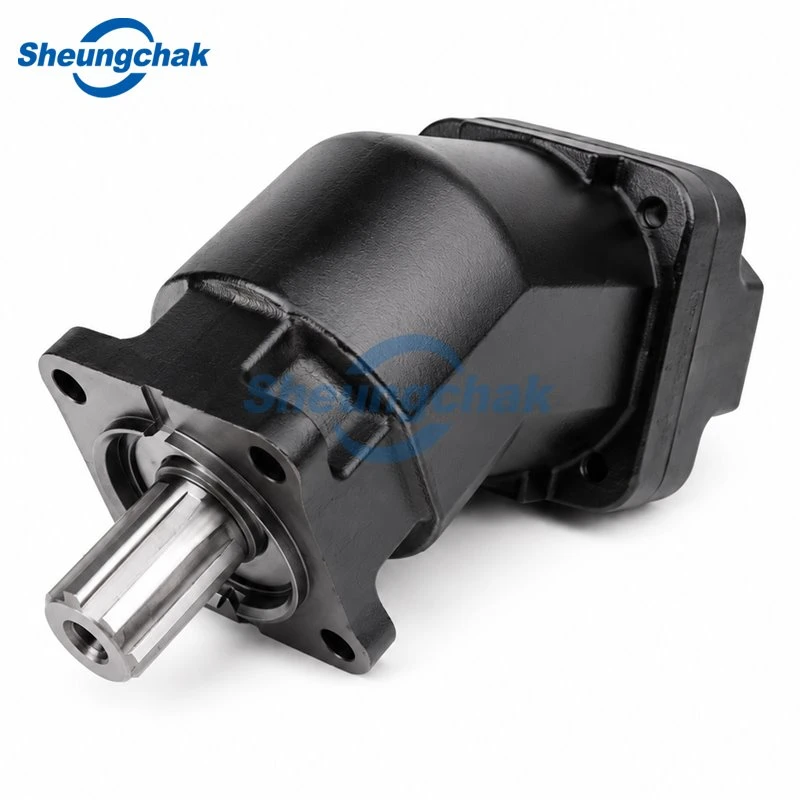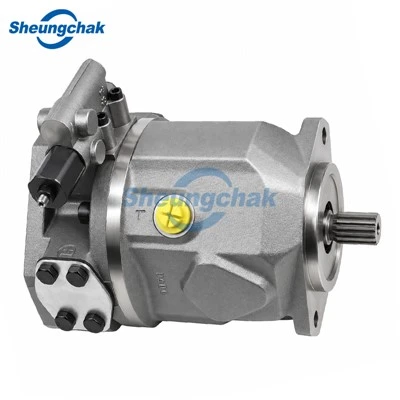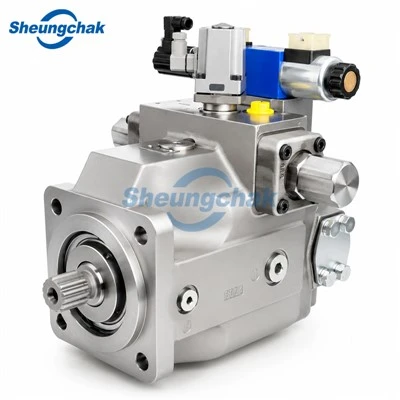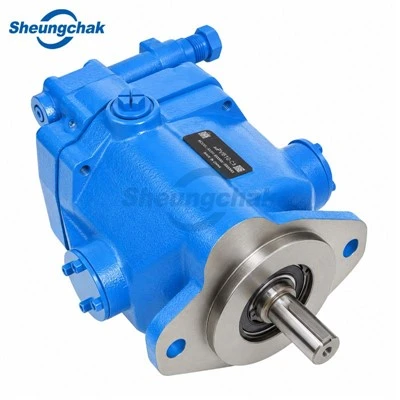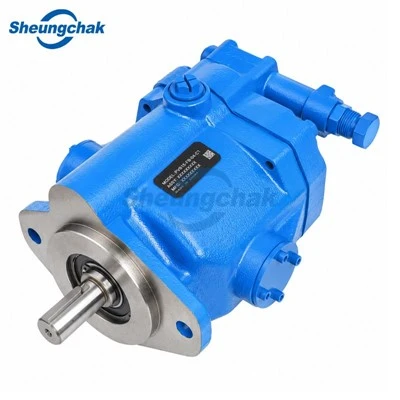

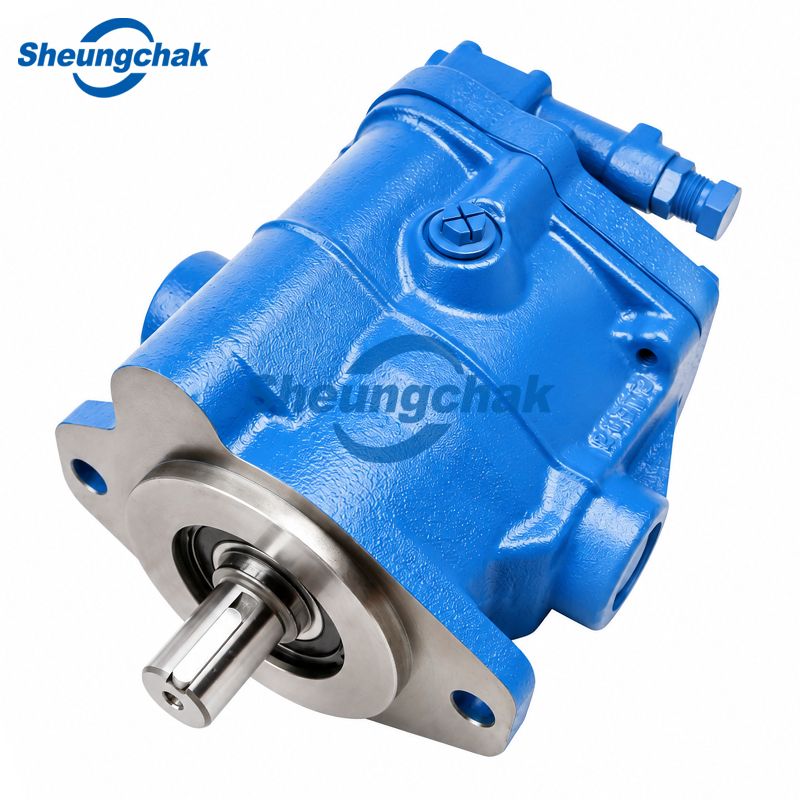
Guangdong Sheungchak Hydraulic Technology Co., Ltd. is one of the leading manufacturers and suppliers of pvb20 in China. With abundant experience, we warmly welcome you to buy high-grade pvb20 for sale here from our factory. All customized products are with high quality and competitive price. Contact us for quotation.
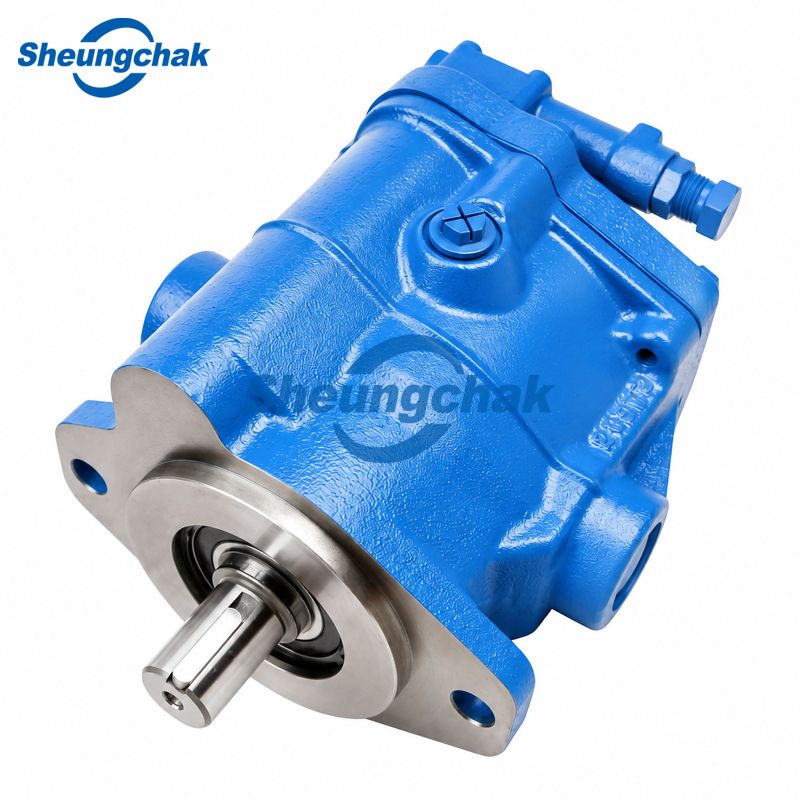
PVB20 moves 42.8 cm³ of oil per shaft revolution at maximum stroke. Put it on a 1,500 rpm motor and theoretical delivery is 64.2 L/min. At 1,800 rpm, 77.0 L/min. The pump does not need to stay there. A pressure compensator can pull the swashplate back when the circuit reaches its pressure setting.
The pressure side is one reason the 20 frame is worth separating from the neighboring sizes. PVB20 reaches 210 bar with anti-wear mineral oil, while PVB15 and PVB29 are limited to 140 bar in the same fluid class. So moving from model 20 to model 29 gives more displacement, but not more pressure. That catches people out on old machine replacements.
Most of our enquiries are not new-system drawings. They are old pumps from presses, hydraulic power units, molding machines or production equipment. Sometimes the nameplate survives. Sometimes it doesn't. In that case we work from the 127 mm mounting pilot, 31.7–31.75 mm keyed shaft, rear port arrangement, rotation and controller shape. Those details tell us more than paint color ever will.
Features
42.8 cc/rev displacement - about 77 L/min theoretical output at the 1,800 rpm speed limit.
210 bar mineral-oil rating - roughly 27 kW of theoretical hydraulic power at full flow and full pressure.
C control range of 17–210 bar - pressure can be set over a much wider window than a fixed relief-only circuit.
CM control range of 17–100 bar - useful where 210 bar adjustment would simply be unnecessary.
Maximum flow can be mechanically limited - CC/CMC versions allow maximum displacement to be set from roughly 25% to 100%.
4–6 bar compensator transition band - delivery can move from maximum toward zero across a relatively narrow pressure rise.
127 mm two-bolt mounting pilot - the standard SAE-style replacement face keeps the old machine interface usable.
Through-shaft version available - PVB20/29 side-port builds provide an auxiliary shaft, with a maximum output torque reference of 159 Nm minus the torque already absorbed by the main pump.
[Talk to Our Engineers About Your Application →]
Technical Data
PVB20 Main Operating Data
|
Engineering Item |
PVB20 Value |
What It Means on the Machine |
|
Pump construction |
Variable axial piston |
Swashplate changes displacement |
|
Hydraulic circuit |
Open circuit |
Oil normally returns to reservoir after actuator |
|
Geometric displacement |
42.8 cc/rev |
2.61 in³/rev |
|
Maximum shaft speed |
1,800 rpm |
Applies to mineral oil and listed water-based fluids |
|
Theoretical flow @ 1,500 rpm |
64.2 L/min |
Before volumetric loss |
|
Theoretical flow @ 1,800 rpm |
77.0 L/min |
Approx. 20.3 US GPM |
|
Max. pressure, anti-wear oil |
210 bar |
3,000 psi |
|
Max. pressure, water glycol |
140 bar |
2,000 psi |
|
Max. pressure, water-in-oil |
140 bar |
2,000 psi |
|
Max. inlet pressure |
1.0 bar |
For the normal compensated configuration |
|
Max. case pressure |
0.35 bar |
About 5 psi |
|
C compensator range |
17–210 bar |
250–3,000 psi |
|
CM compensator range |
17–100 bar |
250–1,500 psi |
|
CC / CMC max. stroke setting |
25–100% |
≥40% recommended for easier priming |
|
Load-sensing margin |
Approx. 17 bar |
About 250 psi above load |
|
Extreme viscosity range |
13–220 cSt |
Outside this range should not be treated as normal |
|
Recommended running viscosity |
13–54 cSt |
About 70–245 SUS |
|
Mineral-oil temperature |
−20°C to +80°C |
Around 65°C or below preferred for service life |
|
Water-containing fluid temp. |
+10°C to +54°C |
Lower thermal limit than mineral oil |
|
Ambient temperature |
−20°C to +70°C |
Pump surroundings |
|
Approx. dry weight |
26 kg |
Standard PVB20/29 flange frame |
|
Rotation |
CW or CCW |
Specified looking at shaft end |
The pressure, speed, fluid, viscosity, temperature, weight and control ranges above belong to the PVB20 operating envelope.
Flow, Torque & Power
|
Operating Point |
Flow |
Theoretical Torque |
Theoretical Hydraulic Power |
|
1,500 rpm / 70 bar |
64.2 L/min |
~47.7 Nm |
~7.5 kW |
|
1,500 rpm / 140 bar |
64.2 L/min |
~95.4 Nm |
~15.0 kW |
|
1,500 rpm / 210 bar |
64.2 L/min |
~143 Nm |
~22.5 kW |
|
1,800 rpm / 70 bar |
77.0 L/min |
~47.7 Nm |
~9.0 kW |
|
1,800 rpm / 140 bar |
77.0 L/min |
~95.4 Nm |
~18.0 kW |
|
1,800 rpm / 210 bar |
77.0 L/min |
~143 Nm |
~27.0 kW |
These are theoretical hydraulic figures. The electric motor or engine has to supply more than the hydraulic output because mechanical and volumetric losses still exist.
A 27 kW theoretical duty point is not a reason to blindly fit a 27 kW motor. Starting condition, compensator behavior, duty cycle and actual efficiency need to be included in motor sizing.
Mounting, Shaft & Port Dimensions
|
Interface |
PVB20 Standard SAE Build |
|
Mounting type |
2-bolt SAE-style flange |
|
Pilot diameter |
126.95–127.00 mm |
|
Pilot tolerance band |
0.05 mm |
|
Mounting-hole spacing |
181.0 mm nominal |
|
Mounting holes |
2 × Ø17.5 mm |
|
Input shaft diameter |
31.70–31.75 mm |
|
Shaft diameter tolerance band |
0.05 mm |
|
Shaft key |
7.9 mm square × 31.7 mm long |
|
Shaft projection |
Approx. 47.7 mm |
|
Main inlet / outlet threads |
1.625-12 UNF-2B |
|
Common port designation |
SAE O-ring, approximately -20 size |
|
Case drain |
0.750-16 UNF-2B |
|
Standard overall length, C/CM build |
Approx. 295 mm |
|
Rear body width |
Approx. 189 mm |
Right-hand rotation normally uses A as inlet and B as outlet. Left-hand rotation swaps them.
PVB15 vs PVB20 vs PVB29
Same family. Very different duty points.
|
Item |
PVB15 |
PVB20 |
PVB29 |
|
Displacement |
33.0 cc/rev |
42.8 cc/rev |
61.6 cc/rev |
|
Max. speed |
1,800 rpm |
1,800 rpm |
1,800 rpm |
|
Theoretical flow @ 1,800 rpm |
59.4 L/min |
77.0 L/min |
110.9 L/min |
|
Mineral-oil max. pressure |
140 bar |
210 bar |
140 bar |
|
Theoretical torque at max. pressure |
~73.5 Nm |
~143 Nm |
~137 Nm |
|
Hydraulic power at max. rated point |
~13.9 kW |
~27.0 kW |
~25.9 kW |
|
Frame weight |
~15 kg |
~26 kg |
~26 kg |
|
Main buying reason |
Lower flow |
Higher pressure + mid flow |
Higher flow, lower pressure |
PVB20 has the highest pressure rating of these three, even though PVB29 is physically the larger displacement.
[Request Quote for Your Displacement & Control Type →]
How It Works
1) 42.8 cc is the maximum stroke
The drive motor turns the shaft and cylinder block. Pistons follow the swashplate. At full angle, each shaft revolution moves up to 42.8 cc. At 1,800 rpm that is about 77 L/min before internal leakage. No mystery there.
2) The compensator watches outlet pressure
Oil leaves through the pressure port and goes to the machine valve or actuator. When the circuit is below the compensator setting, the pump can stay near full stroke. As pressure reaches the set point, the control mechanism starts moving the swashplate back.
3) Flow falls before pressure keeps climbing
The C/CM compensator can reduce delivery from maximum toward zero over a typical 4–6 bar pressure gradient. So once a cylinder has stopped moving and pressure has reached the set point, the pump does not need to dump 77 L/min across a relief valve continuously. That is where the variable design cuts wasted hydraulic power.
Model Range
PVB Pump Size Position
|
Model |
Displacement |
Max. Speed |
Mineral-Oil Pressure |
|
PVB5 |
10.55 cc/rev |
3,600 rpm |
210 bar |
|
PVB6 |
13.81 cc/rev |
1,800 rpm |
140 bar |
|
PVB10 |
21.10 cc/rev |
1,800 rpm |
210 bar |
|
PVB15 |
33.00 cc/rev |
1,800 rpm |
140 bar |
|
PVB20 |
42.80 cc/rev |
1,800 rpm |
210 bar |
|
PVB29 |
61.60 cc/rev |
1,800 rpm |
140 bar |
|
PVB45 |
94.50 cc/rev |
1,800 rpm |
210 bar |
|
PVB90 |
197.50 cc/rev |
1,800 rpm* |
210 bar |
PVB20 Control Builds
|
Build |
Control Detail |
|
PVB20-…-C-11 |
Pressure compensator, 17–210 bar |
|
PVB20-…-CM-11 |
Pressure compensator, 17–100 bar |
|
PVB20-…-CC-11 |
C control + adjustable max. displacement |
|
PVB20-…-CMC-11 |
CM control + adjustable max. displacement |
|
PVB20-…-CG-20 |
Remote pressure adjustment |
|
PVB20-…-CVP-12 |
Load sensing with pressure limiting |
The CC/CMC maximum-displacement stop covers roughly 25–100% of maximum delivery, and the load-sensing arrangement works at about 17 bar above load pressure.
Applications & Industries
|
Industry |
Equipment Examples |
What the Pump Does |
|
Hydraulic Power Units |
30–40 hp industrial HPUs, centralized stations |
Delivers up to about 77 L/min, then destrokes when pressure reaches the control setting |
|
Metal Forming |
Presses, shears, bending equipment |
Runs faster approach flow, then reduces delivery during the high-pressure part of the cycle |
|
Plastics Machinery |
Injection, clamp and mold circuits |
Supplies different flow demand without forcing full pump output through every machine step |
|
Machine Tools |
Fixtures, clamping systems, cutting machinery |
Maintains pressure after cylinder movement stops instead of continuing at maximum stroke |
|
Material Handling |
Transfer lines, lifting tables, conveyor hydraulics |
Powers repeated cylinder and hydraulic-motor cycles from one pressure-compensated supply |
|
Process & Heavy Industry |
Mill auxiliaries, mining plant, production skids |
Provides a 210-bar open-circuit supply where the existing machine already uses the PVB20 interface |
Mining, injection molding, metal forming, conveyor systems and primary-metal equipment remain established application directions for this pump family.
About Us
SheungChak produces hydraulic piston pumps, piston motors and related replacement parts under our own OEM program. The PVB20 supplied from our factory is a SheungChak production item, not a finished branded pump bought elsewhere for resale.
Old PVB20 jobs are usually measurement jobs as much as sales jobs. We check the 127 mm pilot, the 31.7 mm shaft, rotation, ports and compensator. If it has a rear shaft, we need to see that too. A pump can bolt onto the electric motor and still be wrong at the plumbing side.
For pumps with damaged tags, send four pictures: shaft end, rear ports, controller side and full side view. Add the motor rpm. That normally tells us enough to start.
Factory experience: 20+ years
Main products: Piston pumps, piston motors and hydraulic replacement components
Main markets: Europe / South America / Middle East / Southeast Asia / Africa
MOQ: 1 PC
Sample orders: 1 PC
Normal lead time: 1-2 days
OEM support: Drawing check, code matching, dimensional verification and batch production.

Certifications
Certificate name
Certificate name
Certificate name
Certificate name
Certificate name
Our Factory & Quipment


cooperative partner
We are looking for a cooperative partner to expand our business.










FAQ Display Content
1) Why does PVB20 only have 42.8 cc/rev if it is called "20"?
Because the 20 is tied to the approximate GPM flow class rather than displacement in cubic centimeters. At 1,800 rpm, 42.8 cc/rev produces about 77 L/min, or a little over 20 US GPM.
2) Can PVB20 run at 210 bar continuously?
The size-20 pressure limit with anti-wear hydraulic oil is 210 bar. The complete system still needs correct cooling, filtration and relief protection. With water glycol or water-in-oil fluid, the pump pressure limit drops to 140 bar.
3) What is the difference between C and CM controls?
C has a pressure-setting range of 17–210 bar. CM limits the range to 17–100 bar. Mechanically they serve the same basic purpose: reducing pump displacement when system pressure reaches the selected setting.
4) Does the pump save energy compared with a fixed piston or gear pump?
It can when the machine spends time holding pressure without needing full flow. Instead of continuously sending 77 L/min across a relief valve, the compensator can destroke the pump near the pressure setting. Actual electricity saving depends on the machine cycle, pressure setting and motor efficiency.
5) Can another pump be mounted behind PVB20?
Yes, a through-shaft version exists. The PVB20/29 through-shaft arrangement uses side working ports and has a rear shaft with a maximum output torque reference of 159 Nm minus the input torque already absorbed by the main pump. Do the torque calculation before choosing the second pump.
6) What oil temperature should we try to keep?
Mineral oil can operate up to 80°C within the listed envelope, but around 65°C or below is the better ceiling when service life matters. Water-containing fluids have a lower maximum of about 54°C.
7) What is the practical difference between PVB20 and PVB29?
PVB29 gives much more flow: about 111 L/min theoretical at 1,800 rpm versus 77 L/min from PVB20. But PVB29 is limited to 140 bar on mineral oil, while PVB20 reaches 210 bar. Higher model number does not mean higher pressure.
8) What should I send before ordering a replacement PVB20?
Send the complete code when it is readable. No tag? Measure the mounting pilot and shaft, then send photos of the shaft end, rear ports, compensator and whole pump. We also need rotation, working pressure, motor rpm and quantity. For through-shaft units, include a photo of the rear coupling.
[Have a Question Not Listed Here? Contact Our Engineers →]
Hot Tags: pvb20, China pvb20 manufacturers, suppliers, factory, A10VSO140, A4VG125, A4VG180, A4VG71, K3V112, K3V112DT