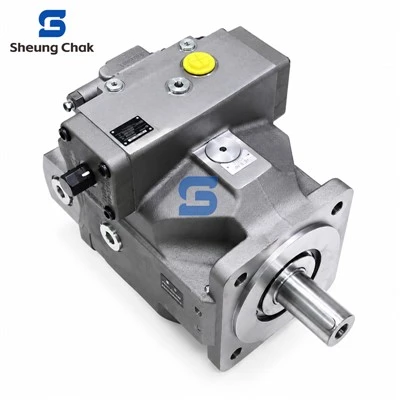

With population growth and economic development, energy issues are receiving increasing attention, especially in my country, where energy conservation is becoming increasingly important. To strengthen enterprises' awareness of energy conservation, my country may implement stricter price controls on electricity used in production. Therefore, energy conservation has become a crucial direction for the development of gear pumps.
As a major type of pump, gear pumps have undergone many significant developments and changes. Early gear pumps were all fully hydraulic. Due to environmental protection and energy conservation needs, as well as the mature application and significant price reduction of servo motors, fully electric precision gear pumps have become increasingly common in recent years. To analyze this development trend, I have listed the following comparative characteristics:
Fully electric gear pumps have a series of advantages, especially in environmental protection and energy conservation. Reports indicate that by the end of December 2014, advanced fully electric gear pumps could save up to 70% on electricity. Furthermore, the use of servo motors provides high injection control precision, stable speed, and multi-stage adjustment. However, fully electric gear pumps have a shorter service life than fully hydraulic gear pumps. Fully hydraulic gear pumps, to maintain precision, must use servo valves with closed-loop control, which are expensive, increasing costs.
Fully hydraulic gear pumps have many unique advantages in forming precision and complex shapes. They have evolved from traditional single-cylinder and multi-cylinder filling types to two-plate direct pressure types, with the two-plate direct pressure type being the most representative. However, the control technology is difficult, the machining precision is high, and the hydraulic technology is also difficult to master.