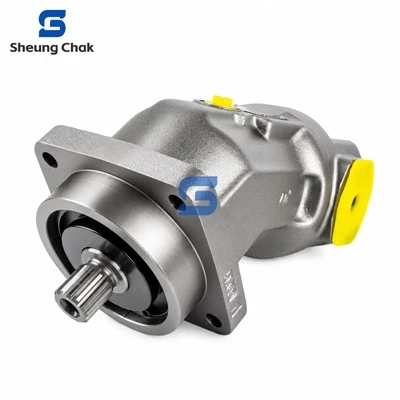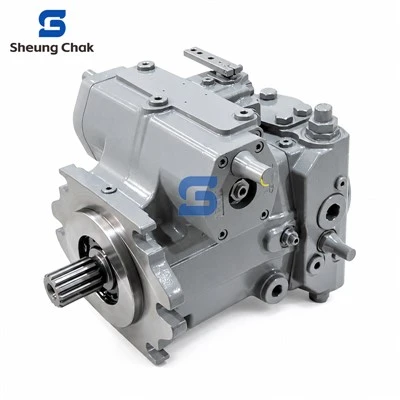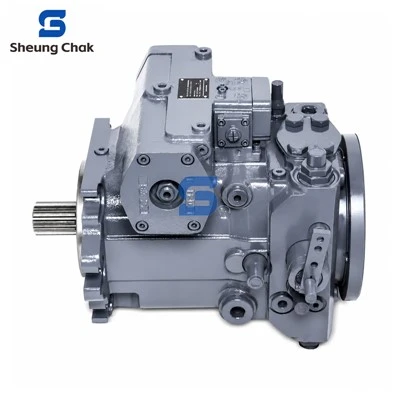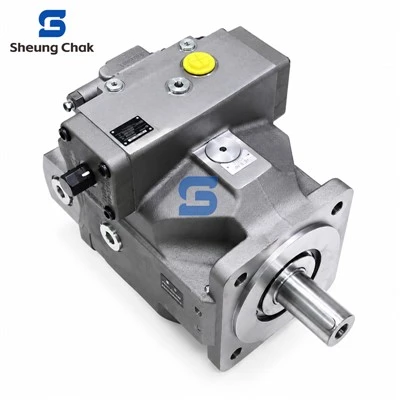

Piston pumps are generally classified into single-piston pumps, horizontal piston pumps, axial piston pumps, and radial piston pumps.
A single-piston pump mainly consists of an eccentric wheel, piston, spring, cylinder block, and two check valves. A sealed volume is formed between the piston and the cylinder bore. One rotation of the eccentric wheel causes the piston to reciprocate once, drawing in oil downwards and discharging oil upwards. The volume of oil discharged per revolution is called the displacement, which depends only on the pump's structural parameters.
A horizontal piston pump consists of several pistons (usually 3 or 6) mounted side-by-side. A crankshaft drives the pistons in reciprocating motion via connecting rods and sliders, or directly via an eccentric shaft, to achieve the suction and discharge of fluids.
An axial piston pump (English name: Piston pump) is a piston pump where the reciprocating motion of the piston or piston is parallel to the central axis of the cylinder block. Axial piston pumps operate by utilizing the volume change generated by the reciprocating motion of pistons parallel to the drive shaft within the piston bore.
Straight-shaft swashplate type: Straight-shaft swashplate piston pumps are divided into pressure-fed and self-priming types. Pressure-fed hydraulic pumps mostly use pressurized oil tanks. With these tanks, the machine must wait for the hydraulic oil to reach the required pressure after each start-up before operation.
Radial type: Radial piston pumps can be divided into two main categories: valve-distributed and shaft-distributed. Valve-distributed radial piston pumps suffer from high failure rates and low efficiency. Shaft-distributed radial piston pumps, developed internationally in the 1970s and 80s, overcame the shortcomings of valve-distributed radial piston pumps.
Hydraulic type: Hydraulic piston pumps use pressurized hydraulic oil tanks. After each start-up, the machine must wait for the hydraulic oil to reach the required pressure before operation. Straight-shaft swashplate piston pumps are divided into pressure-fed and self-priming types.