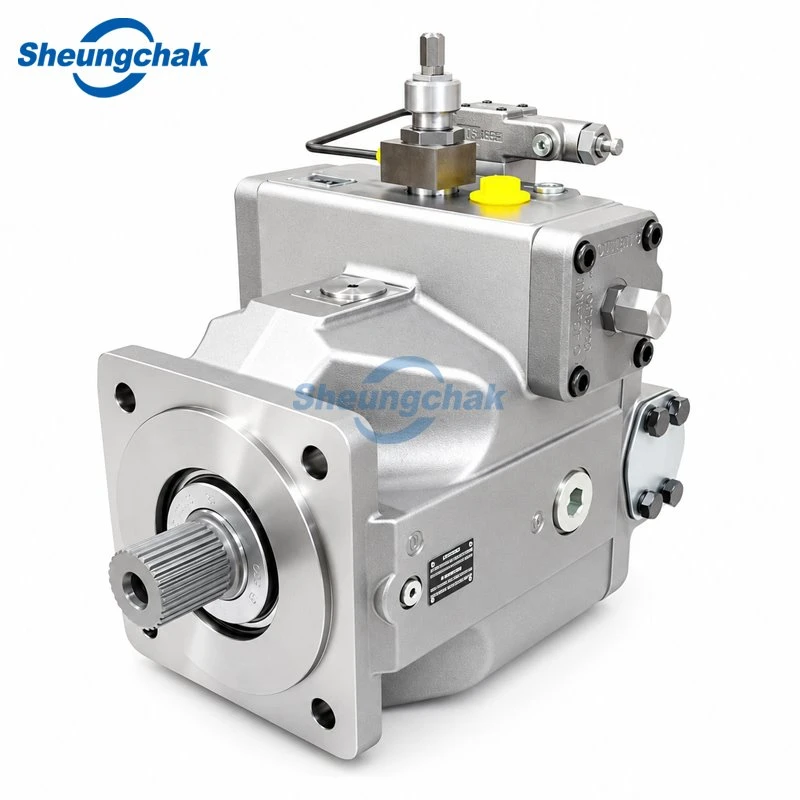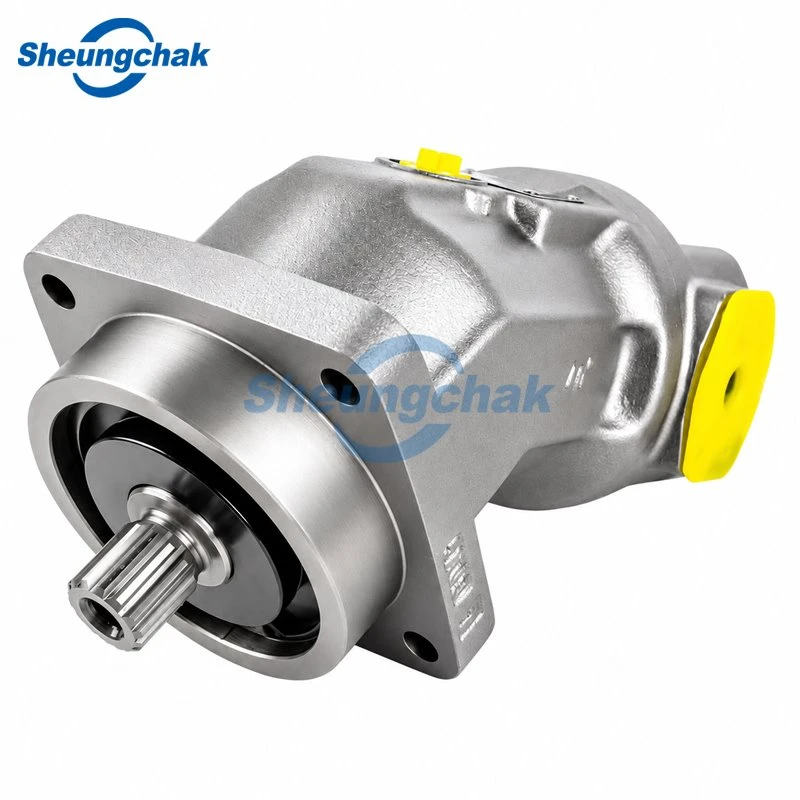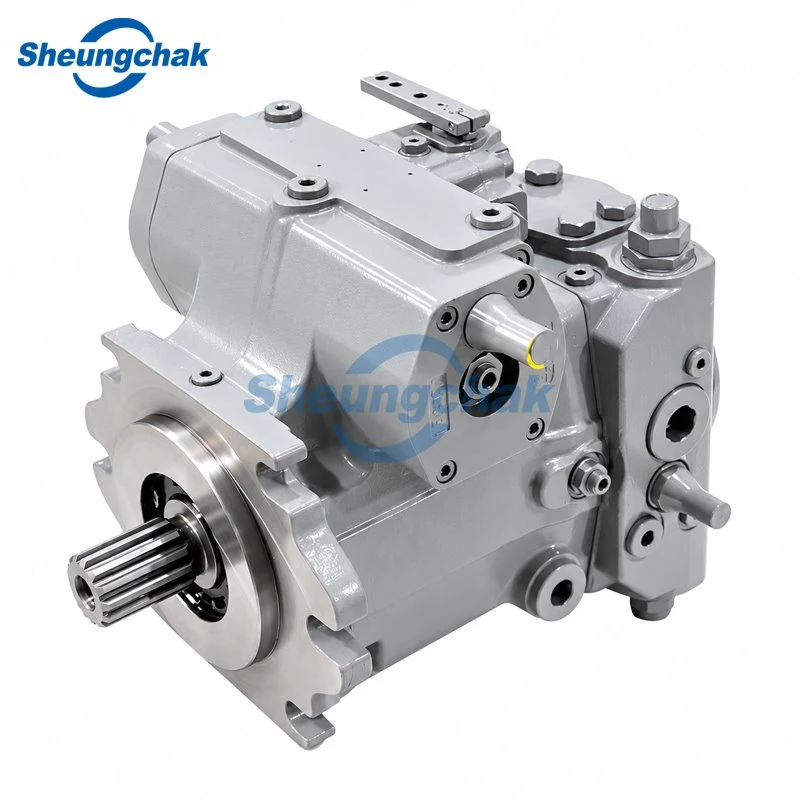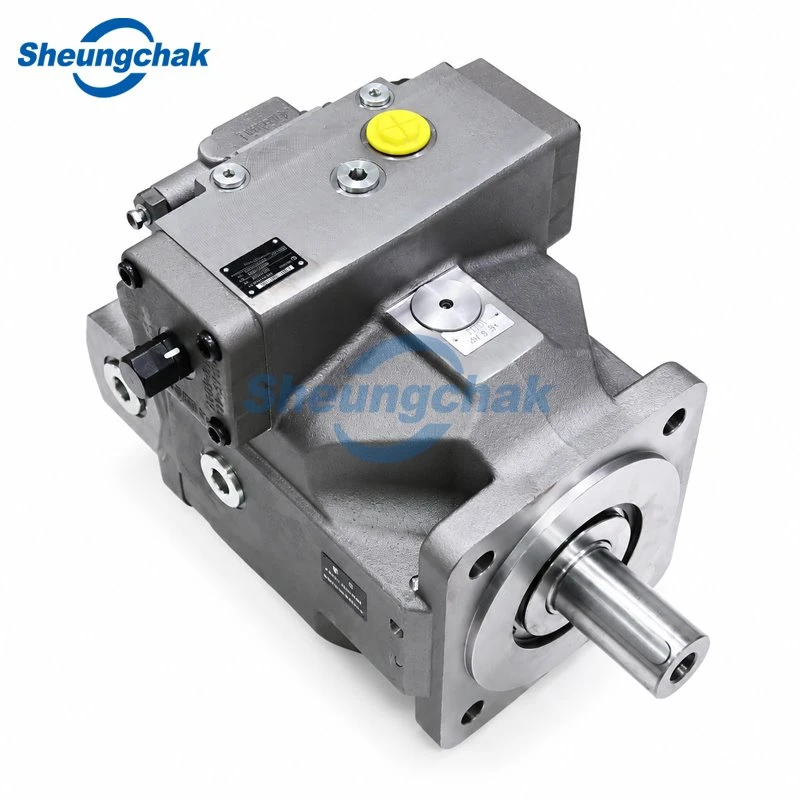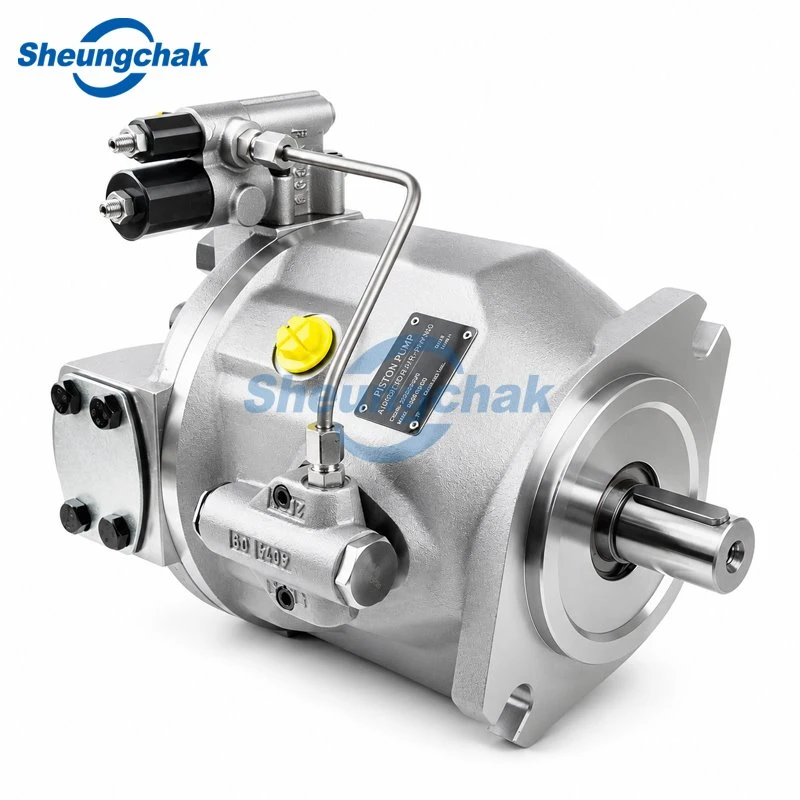

For piston pumps supplied with oil by a make-up pump, operators should inspect the pump 1-2 times daily after 3000 hours of use, checking for normal operating noise. If a decrease in hydraulic cylinder speed or stalling is observed, the make-up pump should be disassembled and inspected for impeller scratches and excessive clearance in the internal gear pump. For self-priming piston pumps, the hydraulic oil level in the tank must not fall below the lower limit indicated on the oil level gauge; a sufficient quantity of hydraulic oil must be maintained. Higher hydraulic oil cleanliness extends the pump's lifespan. The most critical component of a piston pump is the bearing. If bearing clearance occurs, the normal clearance of the three pairs of friction surfaces inside the pump cannot be guaranteed, and the hydrostatic support oil film thickness of each friction surface will be compromised, reducing the bearing's lifespan. According to data provided by the hydraulic pump manufacturer, the average bearing lifespan is 10,000 hours; bearings exceeding this value require replacement.
Without professional testing equipment, it's impossible to determine the clearance of a disassembled bearing; visual inspection is necessary. If scratches or discoloration are found on the roller surface, the bearing must be replaced. When replacing bearings, pay attention to the original bearing's lettering and model number. Piston pump bearings mostly use high-load-capacity bearings; purchase products from the original manufacturer and of the original specifications. If replacing with a different brand, consult an experienced bearing specialist to check the table for the correct replacement, ensuring the bearing's precision grade and load capacity are maintained. The lifespan of a piston pump is related to routine maintenance, the quantity and quality of the hydraulic oil, and the oil's cleanliness. Avoiding particles in the oil from causing wear on the piston pump's friction pairs is also an effective way to extend its lifespan. When replacing parts during maintenance, use original manufacturer parts whenever possible. These parts are sometimes more expensive than imitations, but their quality and stability are better. Purchasing cheaper imitations may seem cost-effective in the short term, but it introduces hidden dangers and could cause greater damage to the piston pump. Distribution plates come in two forms: planar and spherical. For spherical flow distribution friction pairs, shallow scratches on the cylinder block flow distribution surface can be repaired by grinding. However, if the grooves on the cylinder block flow distribution surface are deep, surface engineering techniques should be used to fill the grooves before grinding. Blind grinding should be avoided to prevent thinning of the copper layer or oil leakage through the steel base.
Plunger pumps can also save energy using frequency converters. Engineers at Shanghai Zhengyi point out that in actual production, plunger pumps typically regulate their operating state by pressure or flow rate. When the actual pressure exceeds the required pressure, an overflow valve is used to maintain a stable operating pressure, releasing the excess. Meanwhile, the motor runs at full speed repeatedly, with constant power consumption. When using overflow to regulate pressure and flow, some excess flow returns to the original system, resulting in wasted power and low efficiency for the plunger pump. Using a Chuangjie energy-saving frequency converter allows the overflow valve to be permanently closed, and the frequency converter itself automatically adjusts the operating pressure, maintaining stability and automatically tracking the equipment pressure. This allows for automated control, thereby saving energy. The biggest advantage of this adjustment method is that it can reduce the operating energy consumption of the plunger pump, achieving energy savings of over 30%.