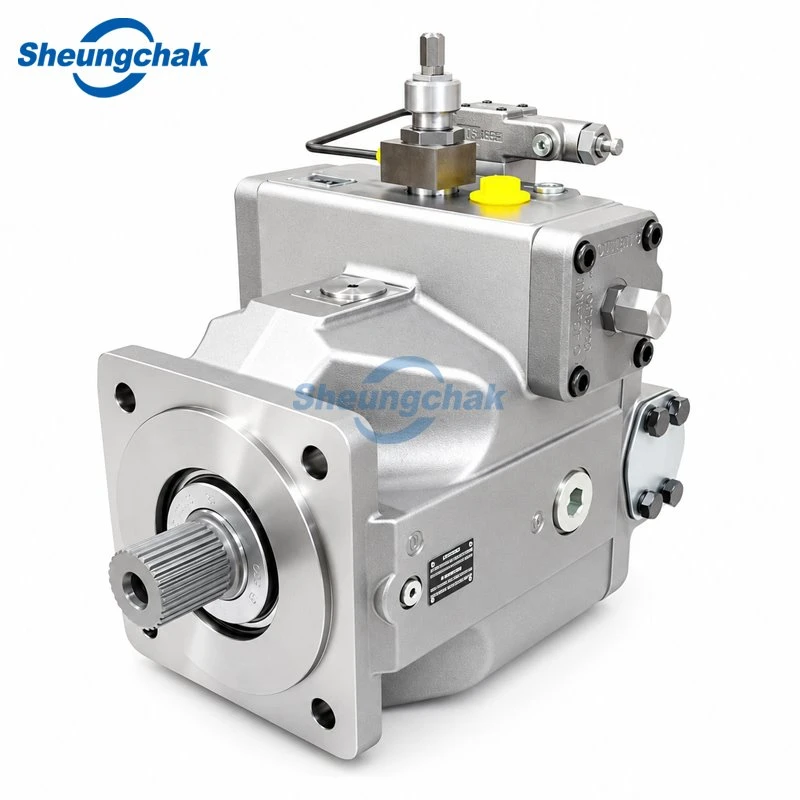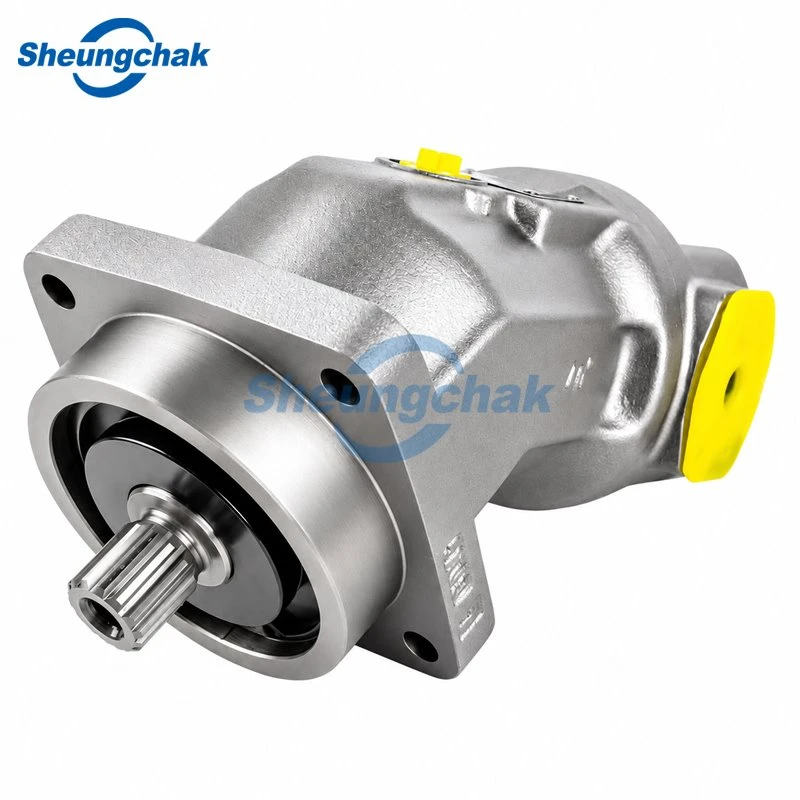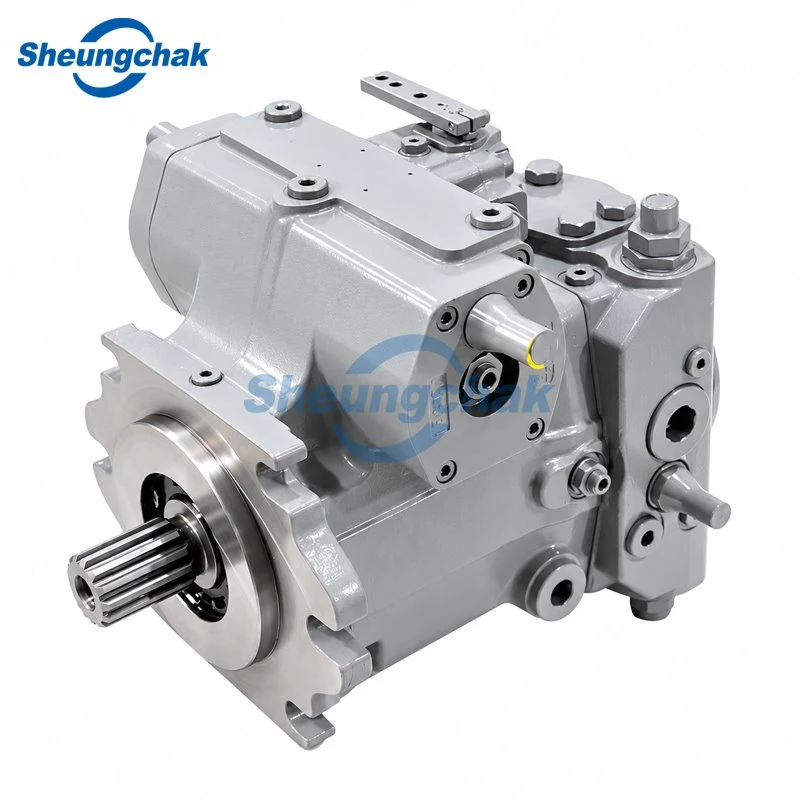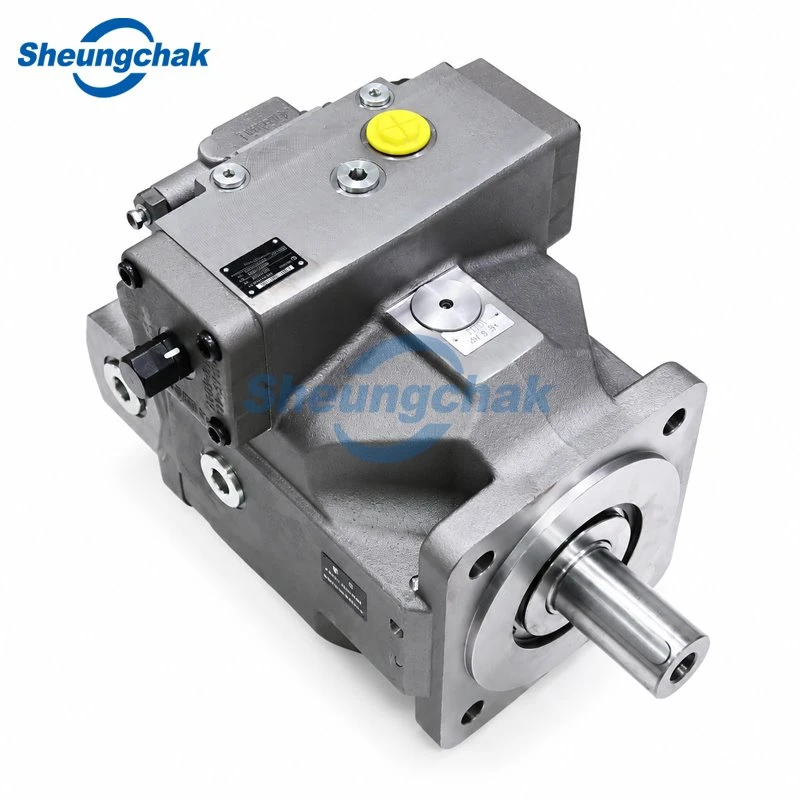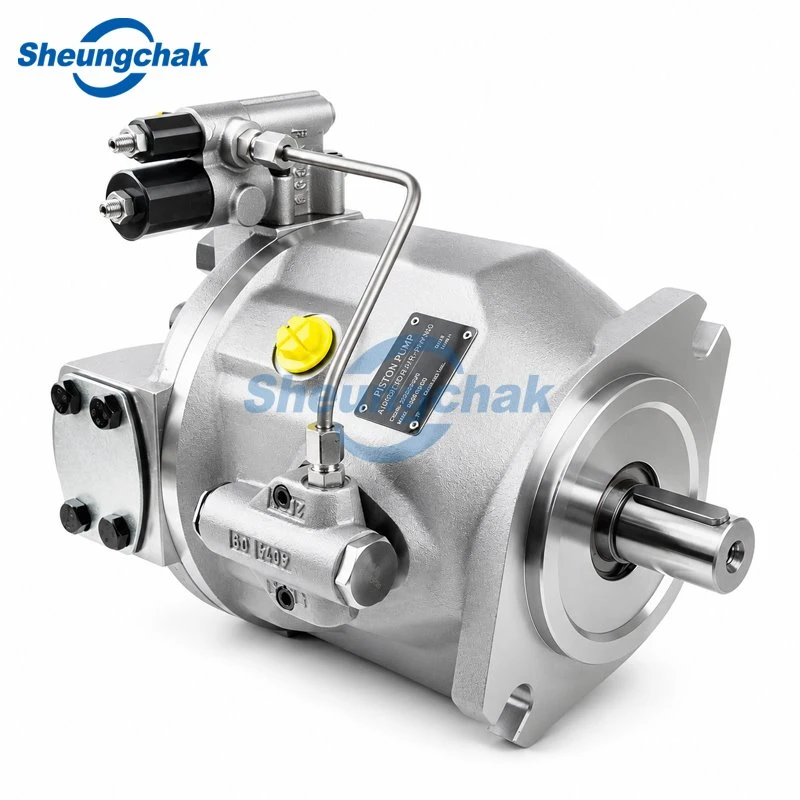

Piston pumps are classified into two representative structural forms: axial piston pumps and radial piston pumps.
As a relatively new and technologically advanced high-efficiency pump, the radial piston pump is poised to become an important component in the piston pump application field due to the accelerating pace of domestic production. A radial piston pump is a piston pump where the reciprocating motion of the piston or plunger is perpendicular to the drive shaft.
The working principle of a radial piston pump is as follows: The driving torque is transmitted from the drive shaft to the star-shaped hydraulic cylinder rotor via a cross coupling. The stator is not subjected to any other lateral forces. The rotor is mounted on a distribution shaft. Radially arranged pistons within the rotor are held against the eccentrically positioned stator by hydrostatically balanced slippers. The pistons are connected to the slippers via ball joints and locked by snap rings. Two retaining rings hold the slippers in place on the stator. When the pump rotates, it is pressed against the inner surface of the stator by centrifugal force and hydraulic pressure. As the rotor rotates, due to the eccentricity of the stator, the pistons reciprocate, with a stroke twice the eccentricity of the stator. The stator eccentricity can be adjusted by two radially opposite plungers on the pump body. Oil inlet and outlet are controlled by the flow channels on the pump body and distribution shaft, and by the suction port on the distribution shaft. The hydraulic pressure generated within the pump body is absorbed by the hydrostatically balanced surface. The hydrostatic balance of the friction pair employs an over-balanced pressure compensation method, forming an open-loop control. The bearing supporting the drive shaft only provides support and is not subjected to other external forces. In the hydraulic system: the axial piston pump operates by utilizing the volume change generated by the reciprocating motion of a plunger parallel to the drive shaft within the plunger bore. Because both the plunger and the plunger bore of the piston pump are circular parts, a very high precision fit can be achieved during machining;