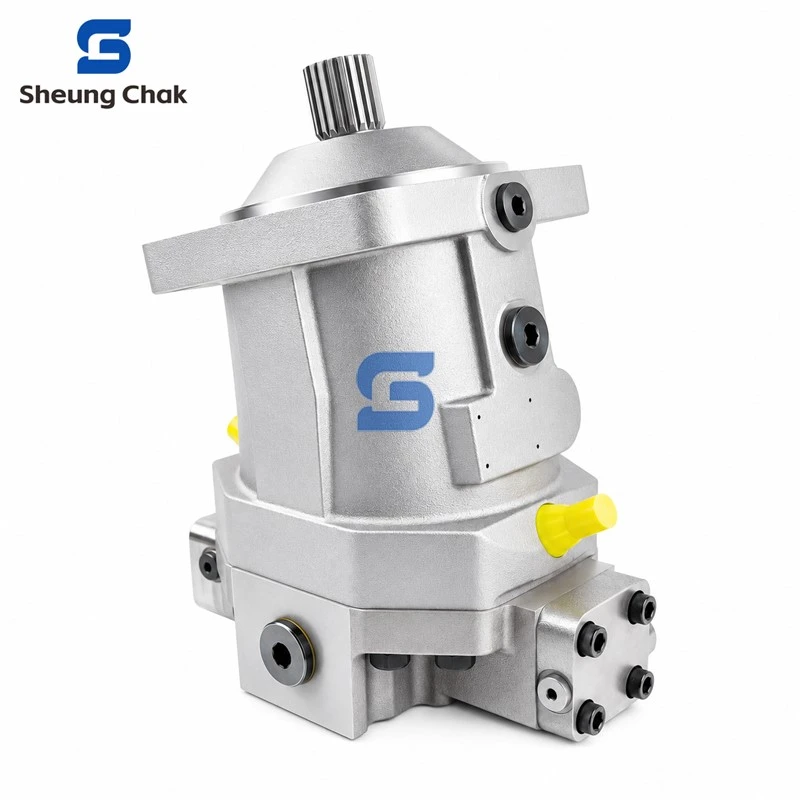

Gear reducer motors are fixed-speed reduction motors; once the speed ratio and motor are selected, the final output speed is fixed. However, in practical applications, many situations require speed variations, such as the spindle speed of a lathe, the agitator shaft speed of various mixers, and the conveyor speed when transporting different items. How to adjust the speed is a topic of great concern to engineering technicians. The following is a brief description of various speed adjustment methods used in engineering.
1. Stepped speed regulation and pole-changing speed regulation are the simplest and most economical speed regulation methods. However, they are limited to small to medium capacity (below 2kW) and applications with infrequent starts. Usually, only two speeds are available, and the achievable speed ratio is relatively small (1:2-6), with a maximum of three speeds. In certain specific industries, such as lathes, gearboxes with gear shifting are often used for stepped speed regulation. Although several speeds are available, the speed range is not large.
2. Stepless speed regulation can be divided into mechanical and electrical types. The former commonly involves inserting a mechanical stepless speed regulating device (mainly belt pulley type and friction disc type) at the connection between the motor and the gearbox. Its advantages are smooth speed regulation, simple structure, and suitability for harsh environments; its disadvantages are a small speed regulation range (generally within 1:10), and the belt and friction disc are consumable parts that require regular maintenance and replacement. The latter refers to cascade speed regulation of asynchronous motors, rotor resistance speed regulation, or voltage regulation speed regulation of DC motors.