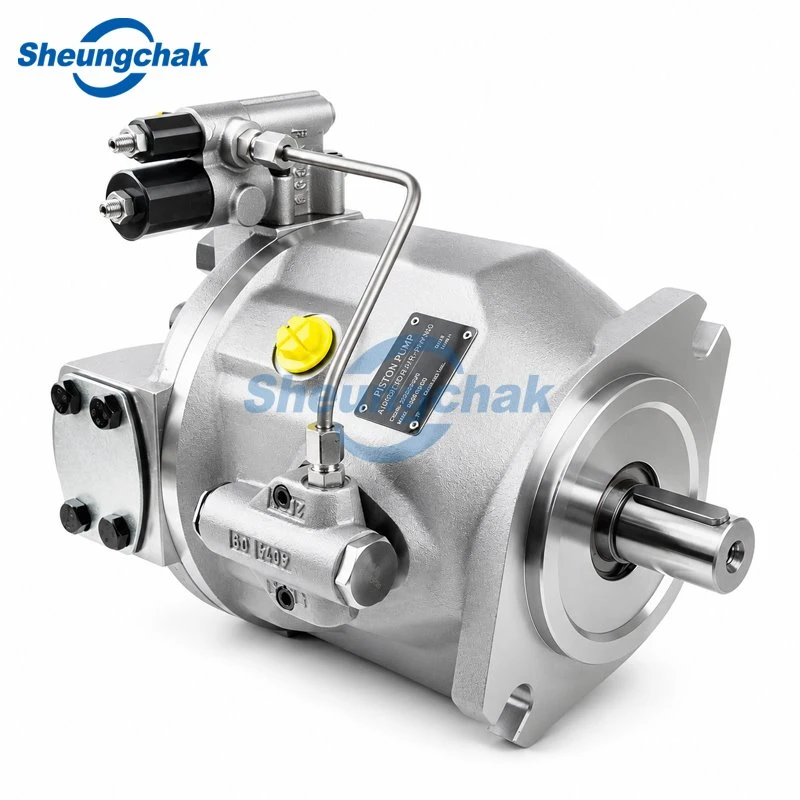

For plunger pumps with copper bushings installed in the cylinder block, installation can be achieved by replacing the bushings. First, the outer diameter of a set of plunger rods is adjusted to a uniform size, then the outer diameter is polished with 1000# or higher grit sandpaper.
Three methods for installing copper bushings in the cylinder block: (a) Hot fitting of the cylinder block or low-temperature cryogenic compression of the copper bushing, using interference fit; (b) Assembly using Loctite adhesive, this method requires grooves on the outer diameter surface of the copper bushing; (c) Tapping the cylinder bore, machining threads on the outer diameter of the copper bushing, applying Loctite adhesive, and then screwing it in for assembly.
For cylinder blocks and copper bushings using a fusion-bonding method, the installation methods are as follows:
(a) Using a grinding rod, manually or mechanically grind and repair the cylinder bore; (b) Using a coordinate boring machine, re-boring the cylinder bore; (c) Using a reamer to repair the cylinder bore.
The following methods are employed using "surface engineering technology": (a) electroplating: plating a layer of hard chromium on the plunger surface; (b) brush plating: brush plating wear-resistant material on the plunger surface; (c) thermal spraying or arc spraying or electro-spraying: spraying high-carbon martensitic wear-resistant material; (d) laser cladding: cladding high-hardness wear-resistant alloy powder on the plunger surface. (4) Cylinder body materials without copper bushings are mostly ductile iron. An amorphous thin film or coating is prepared on the inner wall of the cylinder body. Because the inner wall of the cylinder body bore has this special material, a hard-hard pair of friction can be formed.