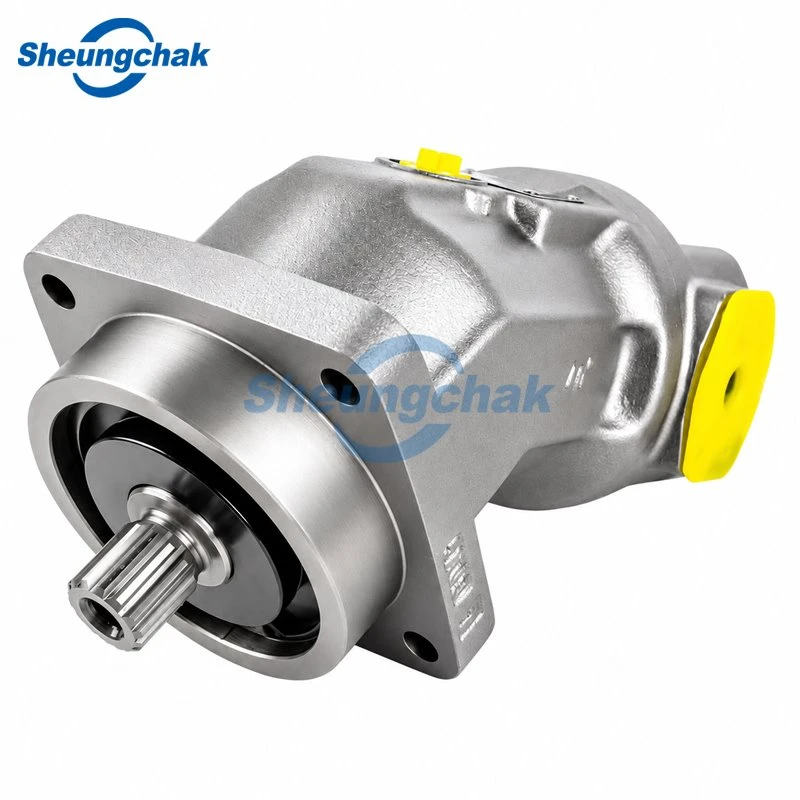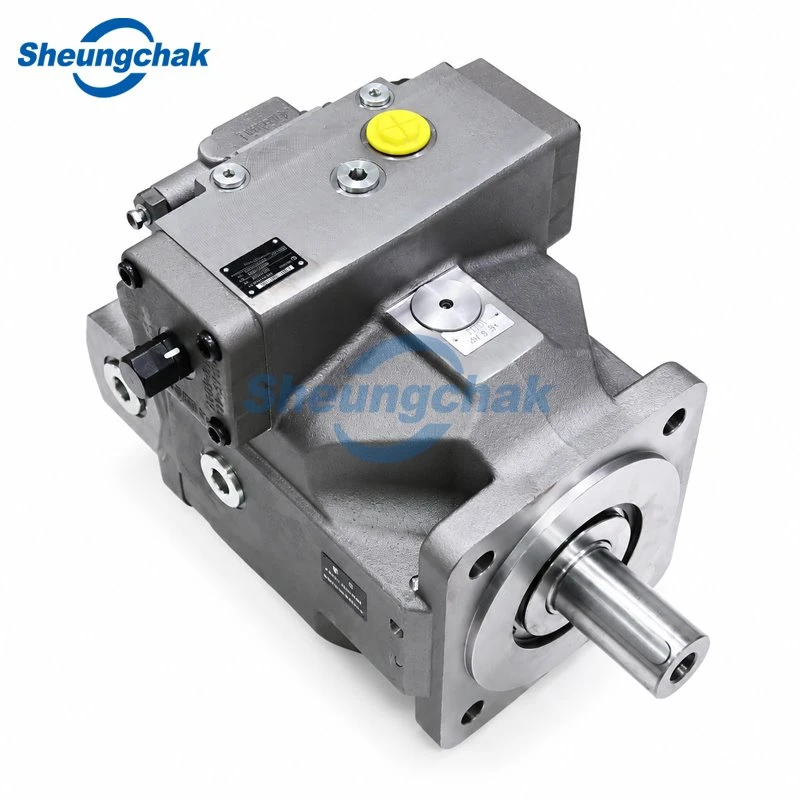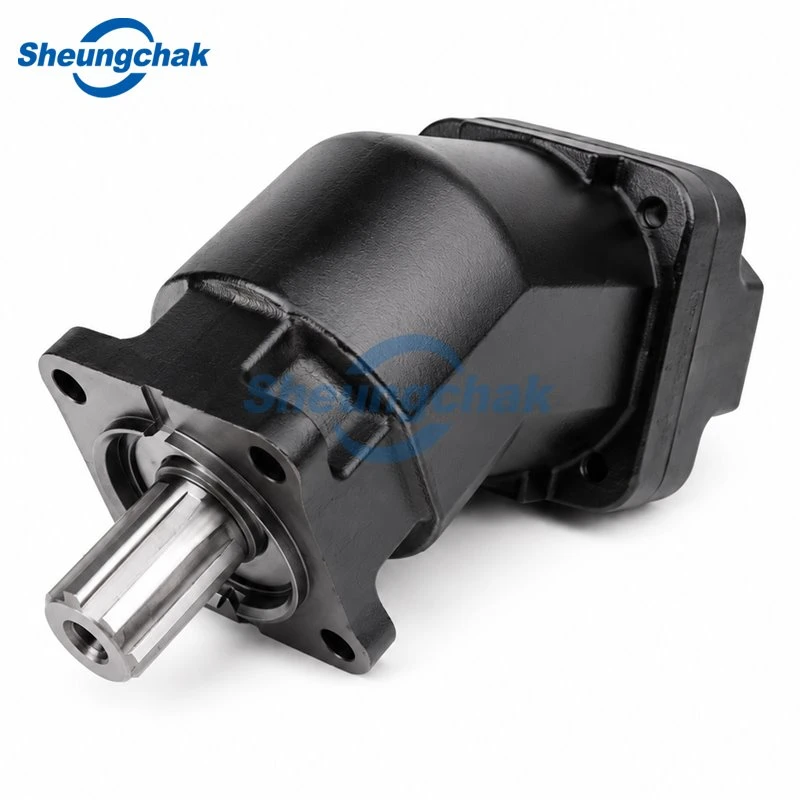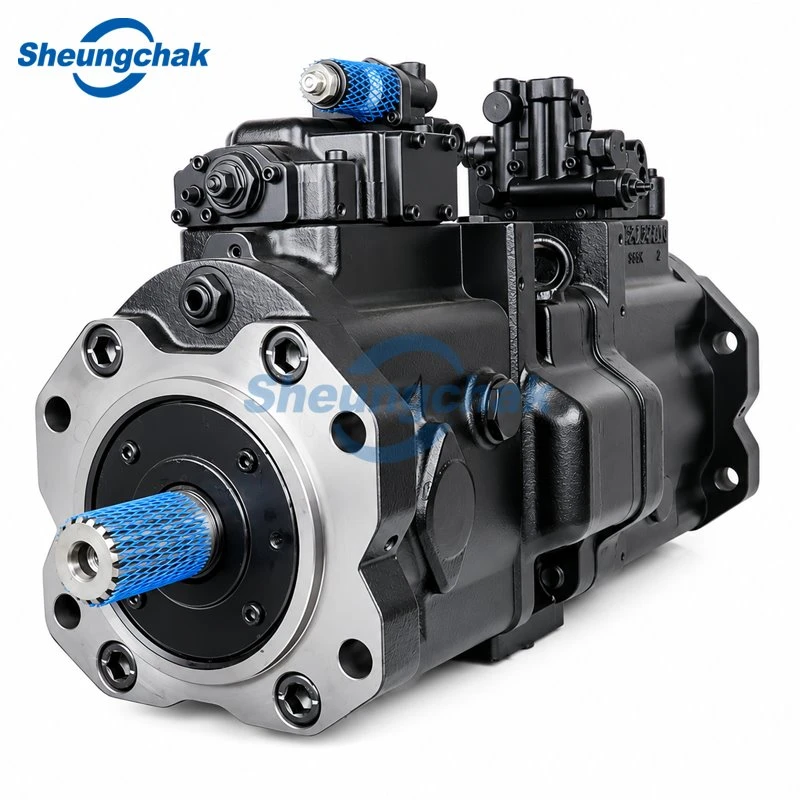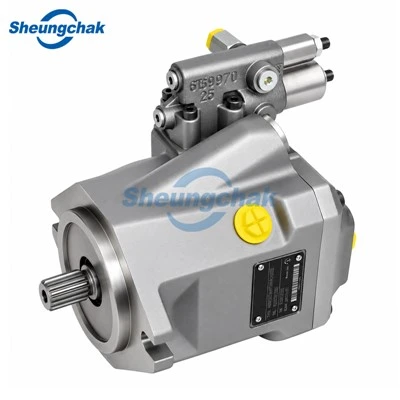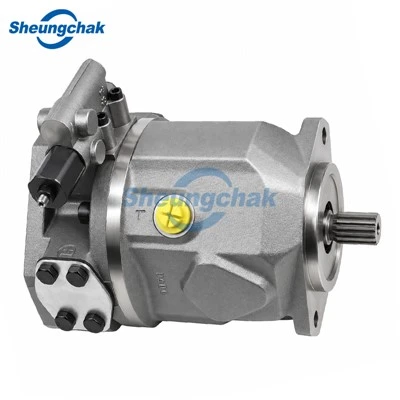

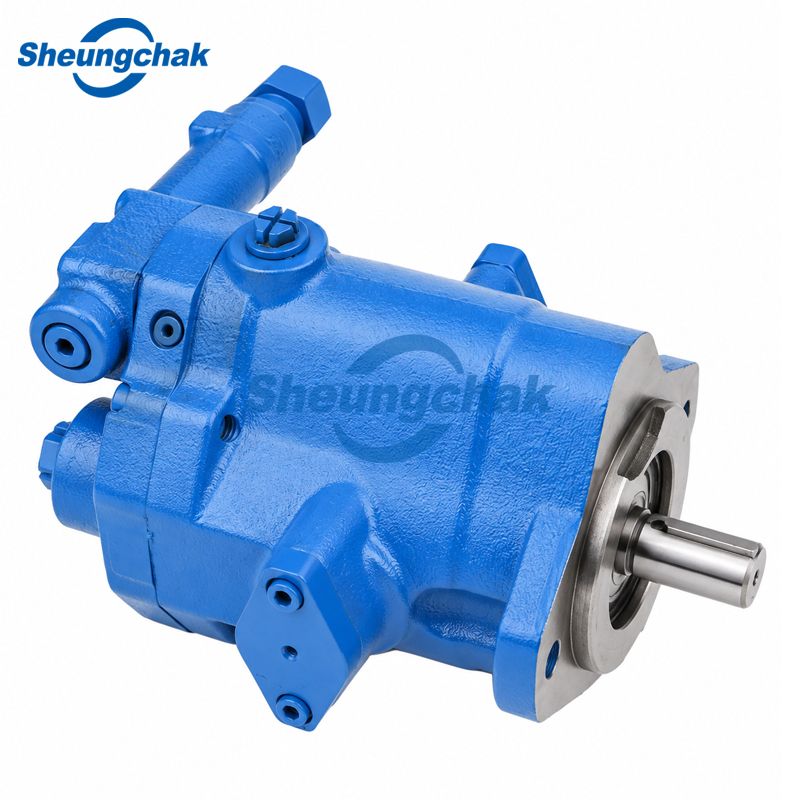
Guangdong Sheungchak Hydraulic Technology Co., Ltd. is one of the leading manufacturers and suppliers of pvb5 in China. With abundant experience, we warmly welcome you to buy high-grade pvb5 for sale here from our factory. All customized products are with high quality and competitive price. Contact us for quotation.
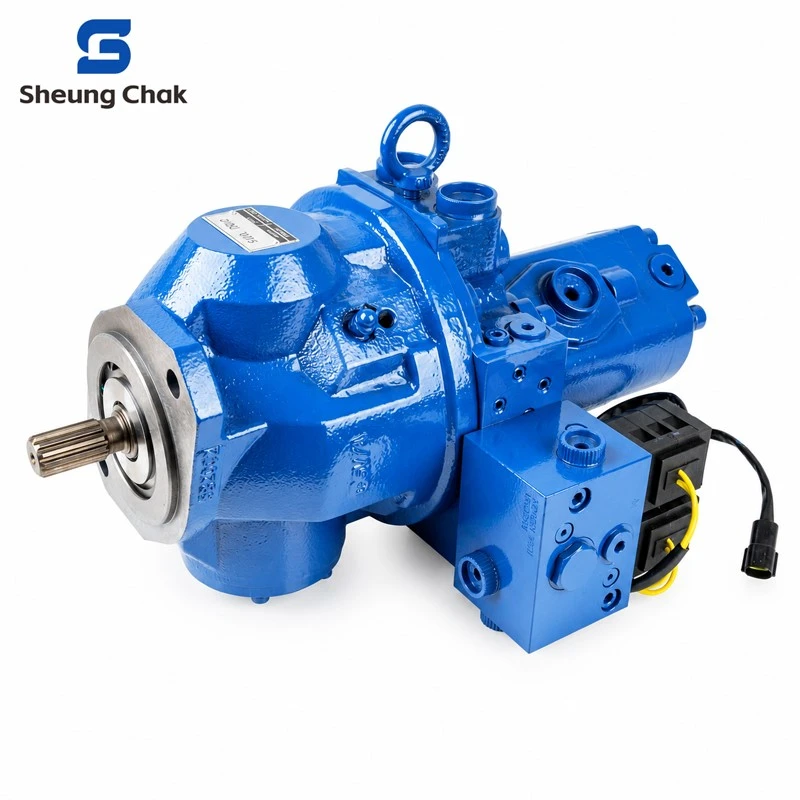
PVB5 moves 10.55 cm³ per shaft revolution at maximum stroke. Put it on a 1,500 rpm motor and theoretical delivery is about 15.8 L/min. At 1,800 rpm, roughly 19.0 L/min. That is where the "5" size starts making sense-it lands around the 5 GPM flow class rather than meaning 5 cc displacement.
With anti-wear hydraulic oil, the size-5 variable pump can work up to 210 bar. With water glycol or water-in-oil emulsion, that limit drops to 140 bar. Same housing size. Different fluid, different allowable duty. This is also why we do not quote pressure from the compensator knob alone. The fluid and complete pump code still matter.
Most PVB5 enquiries are replacement jobs rather than greenfield designs. Small industrial HPUs, machine tools, clamping circuits, test equipment, auxiliary press circuits. On those jobs, the useful measurements are 82.50–82.55 mm mounting pilot, 19.02–19.05 mm shaft diameter, 1-1/16-12 main ports and 9/16-18 drain on the common SAE pressure-compensated build. Those numbers tell us much more than a front photo.
Key Features & Benefits
10.55 cc/rev:at 1,800 rpm, theoretical flow is about 19 L/min.
Pressure limit:210 bar with mineral oil. At full displacement, theoretical shaft torque is roughly 35.3 Nm.
C control:adjustable from 17 to 210 bar, covering both low-pressure work and the full size-5 range.
CM control:limited to 17–100 bar for machines that do not need the higher setting.
CC / CMC adjustment:maximum stroke can be set between 25% and 100%. During priming, keep at least 40%.
CVP load sensing:works with a margin of about 17 bar above load pressure.
Rear shaft capacity:up to 40 Nm on size-5/6 through-shaft versions, minus the torque already taken by the front pump.
Case pressure:maximum 0.35 bar. Run the drain straight back to tank and avoid a restricted shared return line.
[Talk to Our Engineers About Your Application →]
Technical Specifications
PVB5 Core Operating Data
|
Engineering Item |
PVB5 Value |
What We Check |
|
Pump construction |
Variable axial piston |
Swashplate and controller condition |
|
Circuit |
Open circuit |
Tank-return system |
|
Maximum displacement |
10.55 cc/rev |
0.64 in³/rev |
|
Maximum variable-pump speed |
1,800 rpm |
Do not use the 3,600 rpm fixed-pump number |
|
Theoretical flow @ 1,000 rpm |
10.55 L/min |
Full stroke |
|
Theoretical flow @ 1,500 rpm |
15.83 L/min |
Full stroke |
|
Theoretical flow @ 1,800 rpm |
18.99 L/min |
Approx. 5.02 GPM |
|
Max. pressure, mineral oil |
210 bar |
3,000 psi |
|
Max. pressure, water glycol |
140 bar |
2,000 psi |
|
Max. pressure, water-in-oil |
140 bar |
2,000 psi |
|
C compensator adjustment |
17–210 bar |
250–3,000 psi |
|
CM compensator adjustment |
17–100 bar |
250–1,500 psi |
|
CC / CMC volume stop |
25–100% |
≥40% recommended for priming |
|
Load-sensing pressure margin |
Approx. 17 bar |
CVP build |
|
Max. case pressure |
0.35 bar |
5 psi |
|
Approx. dry mass |
8 kg |
PVB5/6 flange frame |
|
Rotation |
CW or CCW |
Specified looking at shaft |
|
Normal mounting |
Horizontal preferred |
Shaft-up requires extra drain option |
The displacement, pressure, weight, control ranges and installation limits above come from the size-5 variable-pump operating envelope.
Flow, Torque and Hydraulic Power
No "high power density" sentence here. Just the numbers
|
Operating Point |
Theoretical Flow |
Theoretical Torque |
Hydraulic Power |
|
1,000 rpm / 70 bar |
10.55 L/min |
11.8 Nm |
1.23 kW |
|
1,500 rpm / 70 bar |
15.83 L/min |
11.8 Nm |
1.85 kW |
|
1,800 rpm / 70 bar |
18.99 L/min |
11.8 Nm |
2.22 kW |
|
1,500 rpm / 140 bar |
15.83 L/min |
23.5 Nm |
3.69 kW |
|
1,800 rpm / 140 bar |
18.99 L/min |
23.5 Nm |
4.43 kW |
|
1,500 rpm / 210 bar |
15.83 L/min |
35.3 Nm |
5.54 kW |
|
1,800 rpm / 210 bar |
18.99 L/min |
35.3 Nm |
6.65 kW |
These are calculated theoretical values before volumetric and mechanical losses. Actual electric-motor input must be higher than the hydraulic output.
Fluid, Temperature and Cleanliness
|
Item |
Working Window |
|
Anti-wear mineral oil temperature |
−20°C to +80°C |
|
Preferred upper temperature for service life |
About 65°C |
|
Water-containing fluid temperature |
+10°C to +54°C |
|
Ambient temperature |
−20°C to +70°C |
|
Extreme viscosity |
13–220 cSt |
|
Recommended running viscosity |
13–54 cSt |
|
Legacy cleanliness callout |
20/18/14 or ISO 18/14 |
|
Current cleanliness coding method |
ISO 4406:2021 |
|
Mineral-oil pressure ceiling |
210 bar |
|
Water-fluid pressure ceiling |
140 bar |
The fluid range is broad, but "can run" and "good for life" are not the same thing. The pump literature allows mineral oil to 80°C while specifically noting that around 65°C is normally the better upper limit when service life matters.
ISO 4406:2021 is the current international method for coding solid-particle contamination.
PVB5 SAE Mounting, Shaft and Ports
|
Interface Point |
Common PVB5 SAE Build |
|
Mounting pilot |
Ø82.50–82.55 mm |
|
Pilot tolerance band |
0.05 mm |
|
Mounting holes |
2 × Ø11.1 mm |
|
Input shaft |
Ø19.02–19.05 mm |
|
Shaft tolerance band |
0.03 mm |
|
Shaft nominal |
0.750 in keyed |
|
Key |
4.8 mm square × 25.4 mm long |
|
Main ports A / B |
1-1/16-12 UNF-2B |
|
Case drain |
9/16-18 UNF-2B |
|
CG remote pilot |
7/16-20 UNF-2B |
|
CVP load-sense port |
7/16-20 UNF-2B |
|
Rotation, RH |
A inlet / B outlet |
|
Rotation, LH |
B inlet / A outlet |
The common pressure-compensated SAE size-5 drawing uses the 82.50–82.55 mm pilot and 19.02–19.05 mm keyed shaft shown above.
PVB5 vs PVB6 vs PVB10
The model number alone does not tell you the pressure class.
|
Item |
PVB5 |
PVB6 |
PVB10 |
|
Displacement |
10.55 cc/rev |
13.81 cc/rev |
21.10 cc/rev |
|
Max. speed |
1,800 rpm |
1,800 rpm |
1,800 rpm |
|
Theoretical flow |
19.0 L/min |
24.9 L/min |
38.0 L/min |
|
Mineral-oil max. pressure |
210 bar |
140 bar |
210 bar |
|
Water-fluid max. pressure |
140 bar |
100 bar |
140 bar |
|
Torque at max. mineral-oil pressure |
35.3 Nm |
30.8 Nm |
70.5 Nm |
|
Approx. frame weight |
8 kg |
8 kg |
15 kg |
|
Main selection reason |
Smallest 210-bar variable frame |
More flow, lower pressure |
About 2× PVB5 flow |
The PVB6 pump has more displacement than PVB5 but a lower pressure ceiling. PVB10 brings the 210-bar rating back and almost doubles PVB5 displacement..
[Request Quote for Your Displacement & Control Type →]
How It Works
1) Output at full stroke
With the swashplate at its maximum angle, the pump moves 10.55 cc per shaft revolution. At 1,800 rpm, theoretical flow is close to 19 L/min.
Motor speed can stay unchanged. Moving the plate back simply reduces the pump delivery.
2) Flow through the rotary group
The piston chambers fill as they pass the inlet side of the port plate. Rotation then carries them to the outlet side, where the pistons move inward and force the oil into the pressure line.
Rear-port function changes with pump rotation. On right- and left-hand versions, the inlet and outlet positions are reversed, so rotation must be checked before shipment.
3) Pressure compensation
C and CM controls react to pressure at the pump outlet. As pressure approaches the selected value, the control piston begins to reduce the swashplate angle.
The pump can move from full delivery toward almost zero flow across a pressure rise of roughly 4–6 bar. Once circuit pressure drops, the swashplate moves back and delivery increases again.
Model Range
PVB5 Control Builds
|
Build Direction |
Control |
What Actually Changes |
|
PVB5-…-C |
Pressure compensator |
17–210 bar setting range |
|
PVB5-…-CM |
Low-range compensator |
17–100 bar |
|
PVB5-…-CC |
Compensator + max stroke stop |
Maximum output adjustable 25–100% |
|
PVB5-…-CMC |
CM + max stroke stop |
Lower pressure range plus flow limit |
|
PVB5-…-CG |
Remote compensator |
External pilot adjusts pressure |
|
PVB5-…-CVP |
Load sensing |
About 17 bar margin above load |
|
PVB5-…-H |
Handwheel |
Manual displacement adjustment |
|
PVB5-…-M |
Lever |
Displacement follows mechanical lever position |
|
PVB5-…-V |
No external control lever |
Manual-control base version |
|
PVB5-…-S30 |
Extra case drain |
Allows vertical shaft-up installation |
PVB5 also supports right- and left-hand rotation. The manual H/M/V control types are specific options on the smaller PVB5–15 frames.
Applications & Industries
|
Industry |
Equipment Examples |
What the Pump Does |
|
Machine Tools |
Clamps, fixtures, feed systems |
Supplies up to about 19 L/min, then reduces displacement once pressure is reached |
|
Small Hydraulic Power Units |
3–7.5 kW HPUs, auxiliary stations |
Covers low-flow circuits without using a larger 20–40 L/min pump |
|
Metal Forming |
Small presses, punches, positioning circuits |
Gives approach flow, then destrokes as working pressure rises |
|
Plastics Machinery |
Clamp auxiliaries, mold functions |
Maintains pressure during hold periods without staying at full displacement |
|
Test Equipment |
Hydraulic test stands, laboratory rigs |
Lets pressure be adjusted from roughly 17 to 210 bar with C control |
|
Process & Handling Equipment |
Transfer units, lifting fixtures, small conveyors |
Runs repeated cylinder or motor functions from one compact open-circuit supply |
Machine tools, metal-forming equipment, injection machinery, conveyor systems and industrial hydraulic systems are established application areas for the PVB pump family.
About Us
SheungChak builds hydraulic piston pumps, motors and replacement parts under our own OEM production program. The PVB5 supplied from us is produced as a SheungChak product.
Small pumps can actually be annoying replacement jobs. There is less room to hide a mistake. Wrong rotation and A/B swap. Wrong shaft. Wrong compensator. A 0.75-inch shaft can still be wrong if the key or projection does not match.
Our usual check is quick: nameplate, shaft photo, rear ports, controller side. For an old unit with no readable code, send the pilot diameter too. Around 82.5 mm immediately tells us a lot.
Factory experience: 20+ years
Main products: Piston pumps, piston motors and hydraulic replacement components
Main markets: Europe / South America / Middle East / Southeast Asia / Africa
MOQ: 1 PC
Sample orders: 1 PC
Normal lead time: 1-2 days
OEM support: Drawing check, code matching, dimensional verification and batch production.

Certifications
Certificate name
Certificate name
Certificate name
Certificate name
Certificate name
Our Factory & Quipment


cooperative partner
We are looking for a cooperative partner to expand our business.










FAQ Display Content
1) Is PVB5 a 5 cc pump?
No. Maximum displacement is 10.55 cc/rev. The "5" is tied to the approximate 5 GPM flow class. At 1,800 rpm, theoretical full-stroke flow is about 19 L/min.
2) Can PVB5 run at 3,600 rpm?
Not the variable PVB5. Its maximum shaft speed is 1,800 rpm. The 3,600 rpm figure belongs to the fixed-displacement size-5 pump, which is a different unit.
3) What is the difference between C and CM controls?
C covers roughly 17–210 bar. CM narrows the pressure-adjustment range to 17–100 bar. Both reduce displacement as outlet pressure approaches the selected setting.
4) Can PVB5 reduce electricity consumption?
It can reduce hydraulic waste when the machine spends time holding pressure. Once pressure reaches the compensator setting, pump displacement can fall instead of continuously pushing 19 L/min across a relief valve. Actual electricity saving depends on duty cycle and motor efficiency.
5) Can another pump be driven from the back?
A through-shaft version exists, but the available rear torque is only 40 Nm minus whatever the PVB5 itself is already consuming. At high pressure that remaining margin becomes small very quickly.
6) Can I mount the pump vertically with the shaft pointing up?
Yes, but use the extra S30 drain arrangement. The housing must stay filled with oil, and the upper drain should return unrestricted to the reservoir. Standard horizontal mounting is preferred.
7) What oil temperature should we target?
Mineral oil is allowed up to about 80°C, but roughly 65°C or lower is the better target if service life is important. Water-containing fluids have a lower maximum around 54°C.
8) What do you need for a PVB5 quotation?
Send the complete code when possible. No code? Send the shaft-end photo, rear ports, compensator, mounting face and rotation. Useful measurements are the shaft diameter, pilot diameter and port threads. Also tell us motor rpm, pressure and quantity.
[Have a Question Not Listed Here? Contact Our Engineers →]
Hot Tags: pvb5, China pvb5 manufacturers, suppliers, factory, A4VG71, A4VG90, AP2D36, hydraulic piston pump, hydraulic pump, K3V112