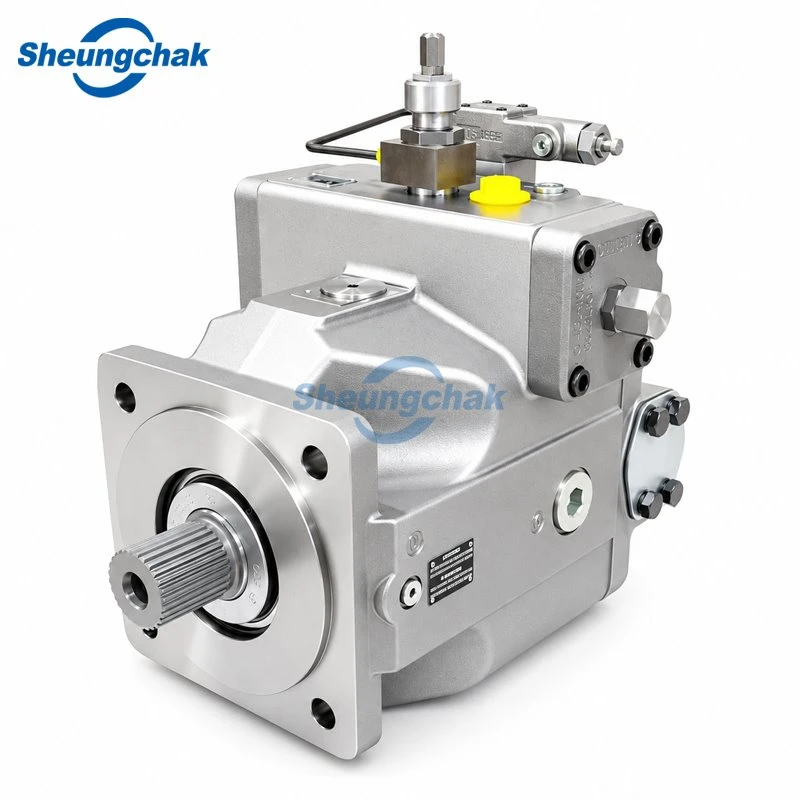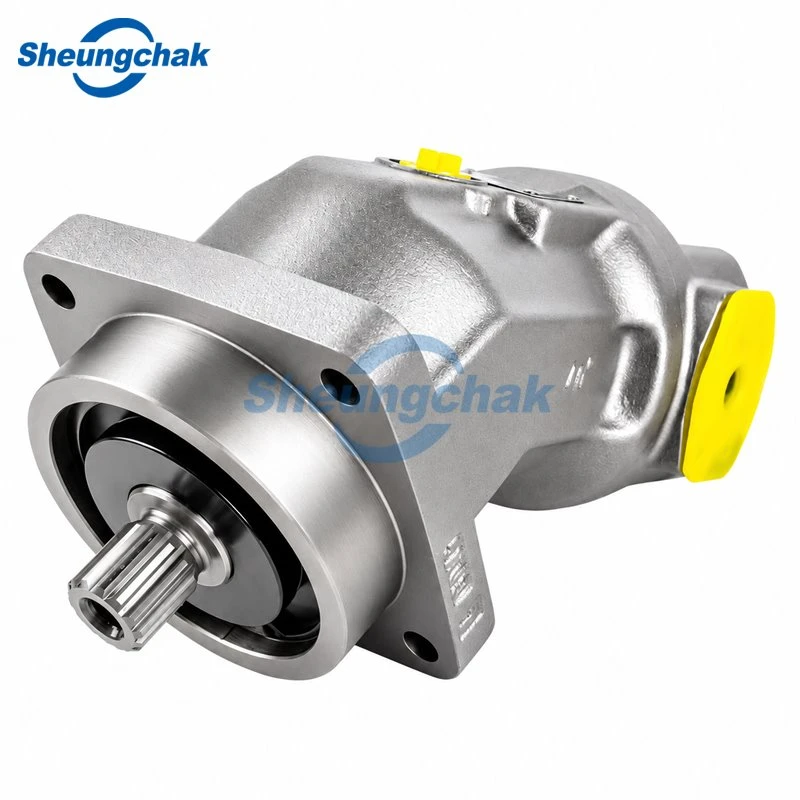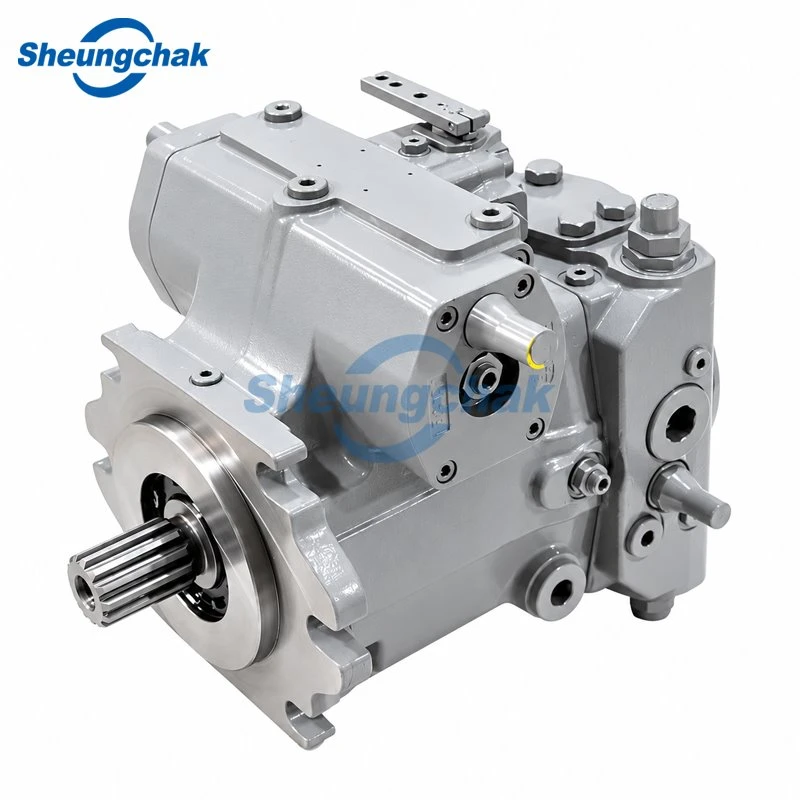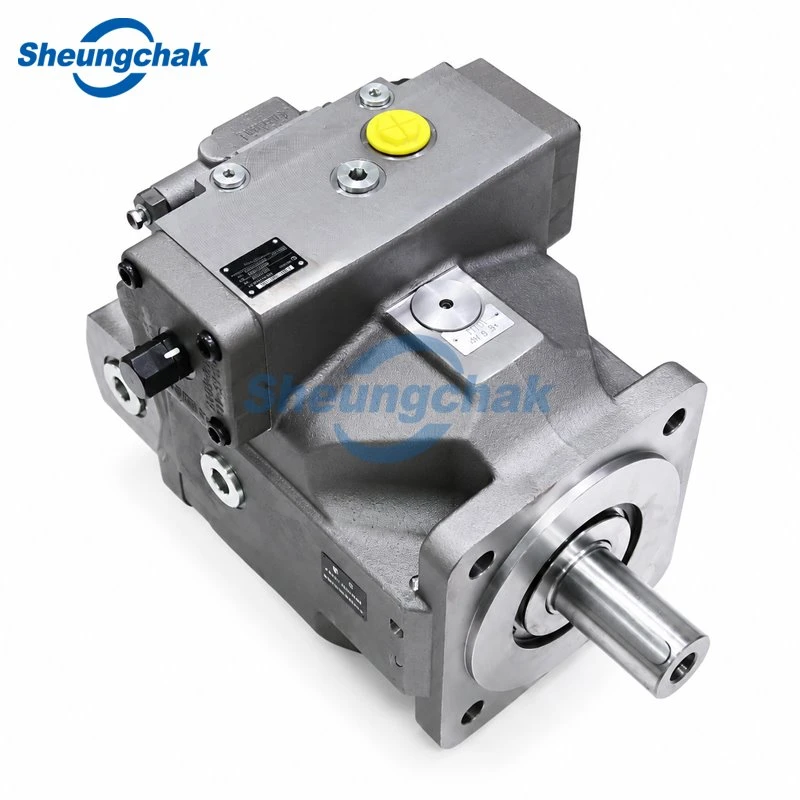

A hydraulic pump nameplate usually carries enough information to identify the unit, but only if you read the right string. Most ordering mistakes come from quoting a serial number as a model, treating the displacement as the whole specification, or trusting a plate that no longer matches the pump it is riveted to. This guide covers how to record the plate, tell each number apart, handle worn or missing plates, and check the plate against the hardware before you request a replacement hydraulic pump.
Record the plate before you clean, remove or order anything
Take the photographs first. Nameplates are thin and often coated in oil and grime. Aggressive cleaning can remove the last legible characters.
01
Photograph the whole plate square-on, then again at a low angle with a flashlight raking across it. Stamped characters that are invisible head-on often show up as shadows.
02
Photograph where the plate sits on the housing. Kawasaki pump specialist RestoPower notes that on tandem excavator pumps the plate is normally on the side of the front pump body, and a separate serial number is stamped into the casting (RestoPower). A second, stamped number is common enough that it is worth checking any casting for one.
03
Transcribe the code exactly as printed, including slashes, hyphens and spaces. Characters such as O/0, I/1 and S/5 are easy to confuse. Mark any uncertain character with a question mark rather than guessing.
04
Note the machine: the equipment make, model and serial number, plus the pump's position in the machine. This helps when the plate turns out to carry a machine builder's part number instead of the pump maker's code.

Tell the numbers on the plate apart
A full plate can carry more than a dozen fields. Bosch Rexroth's instruction manual for the A10VO Series 31 lists 14 items on its name plate: manufacturer, manufacturing date, internal plant designation, direction of rotation, bar code, optional power, flow and pressure settings, rotational speed, displacement, serial number, material number, type code and customer material number (Bosch Rexroth, RE 92701-01-B).
Other manufacturers lay their plates out differently. The table below groups the fields by what they are for.
| Field (common labels) | What it identifies | Can you order from it alone? |
|---|---|---|
| Type code / model code / "Typ" | The configuration: family, size, control, series, rotation, seals, shaft, flange, ports, through drive | It's the main input, but still check it against the drawing and the hardware |
| Material number / part number | The manufacturer's catalog item for that exact build | Useful for the original maker; another supplier may not be able to decode it |
| Serial number | This individual unit | No. It traces the unit's build history but does not describe the configuration |
| Manufacturing date | When the unit was built | No. It tells you which edition of the datasheet to decode against |
| Customer / OEM material number | The machine builder's own part number | No. It has to be cross-referenced through the machine builder |
| Settings (pressure, flow, power) | Values set at the factory for that build, where printed | No. These are adjustments, not ratings, and they may have been changed in service |
The type code is the string you decode. Keep the others with it, though. When a supplier's code interpretation is in doubt, the material number, serial number and date are what let the original manufacturer resolve it.
Decode the type code against the right datasheet
Most piston pump codes follow the same logic. A family prefix comes first, then the size (usually the maximum displacement in cm³/rev), then fields for the control, series, rotation, seals, shaft, mounting flange, ports and through drive. Parker's PVplus catalog, for example, puts a three-digit displacement straight after the PV prefix and follows it with R or L for rotation viewed on the shaft (Parker, MSG30-3245/UK).
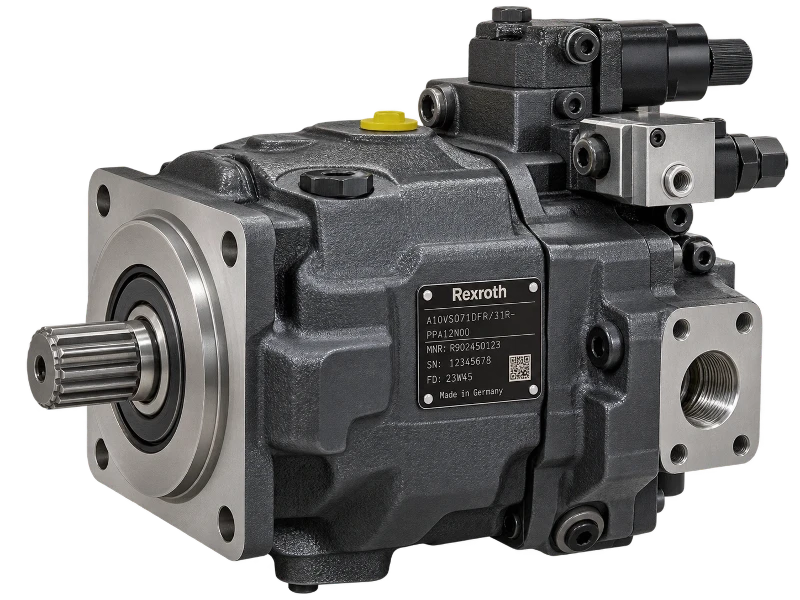
Here is an illustrative code built from the type-code table in Rexroth's A10VSO Series 31 datasheet (Bosch Rexroth, RE 92711/2021-05-17):
A10VSO 71 DFR /31 R – V S A 42 N00
| Segment | Meaning in RE 92711/2021-05-17 |
|---|---|
| A10VS + O | Variable swashplate axial piston unit, open circuit |
| 71 | Size (NG) 71 |
| DFR | Pressure-flow controller |
| 31 | Series 3, index 1 |
| R | Clockwise, viewed on the drive shaft |
| V | FKM seals |
| S | Splined shaft to ISO 3019-1, standard version |
| A | 2-hole mounting flange to ISO 3019-2 |
| 42 | SAE flange working ports to ISO 6162, metric fastening threads (listed for NG 71 and 88) |
| N00 | No through drive |
Three rules make decoding reliable:
Match the datasheet edition to the plate date. Code tables change between editions and between metric and North American versions. A code that "doesn't exist" in the current sheet may be valid in an older one.
Check combinations, not just individual letters. The datasheet restricts some options by size. For example, the same A10VSO sheet shows the higher-torque R shaft as unavailable for size 100. A code whose combination fails the table is either mis-transcribed or a special build.
Follow the control code to its own document. The type code names the control family. The setting ranges and port details sit in a separate control datasheet.
Our model-code guides take individual families position by position. The A4VSO model code guide is one example.
What the nameplate does not tell you
A correctly decoded code still leaves gaps that matter when you replace a pump:
Rated pressure usually isn't in the code. It comes from the datasheet for that family and configuration. RE 92711 lists 280 bar nominal and 350 bar maximum pressure for the A10VSO Series 31. The 350 bar maximum is limited to short single operating periods, so treat it as a limit, not a continuous rating (Bosch Rexroth, RE 92711).
Displacement is a maximum. On a variable pump, the size figure is the maximum geometric displacement. Actual flow depends on speed and swashplate position.
Printed settings may be out of date. If someone has adjusted the compensator in service, the plate still shows the factory value.
The plate may not match the pump. Rebuilt pumps can have their controls, shafts or seals changed while the original plate stays on the housing.
Operating conditions are missing. Fluid type, drive speed and duty cycle come from the machine, not the plate.
The datasheet itself says this: Rexroth asks buyers to specify the relevant technical data in addition to the type code when ordering (Bosch Rexroth, RE 92711).
Four plate conditions, four routes to an identification
How far the nameplate can take you depends on what state it's in.
| What you have | Most reliable route | Main risk |
|---|---|---|
| Complete, legible pump-maker plate | Decode the type code against the dated datasheet, then verify the hardware (next section) | Rebuild changes the plate no longer reflects |
| Partly legible plate | Use the legible prefix and size to find the family, then fill the missing fields from physical measurements. Keep the serial number and date for the original maker | Guessing a missing letter that changes seals, shaft or control |
| Plate shows only a machine builder's part number | Cross-reference through the equipment dealer using the machine serial number, then confirm with measurements | The builder may have used more than one pump configuration under one part number |
| No plate | Identify the family by construction, then measure flange, shaft, ports and control. RestoPower notes that frame size can usually be confirmed from the mounting flange and port centers (RestoPower) | Measurements confirm the interfaces but not internal details such as control settings or seal material |

A pump identified only from measurements carries more risk than one identified from a legible plate. In that case, get a dimensioned drawing of the offered unit and compare it against your measurements before you commit.
Check the plate against the pump in your hands
Always check the physical pump, even when the plate is perfect. Each item below maps to a field in the code:
Rotation. Compare the plate's rotation marking with the drive direction, using the convention in the datasheet. Rexroth, for example, defines rotation viewed on the drive shaft (Bosch Rexroth, RE 92711).
Mounting flange. Count the bolt holes and measure the pilot diameter. Flanges follow SAE J744 or ISO 3019 (SAE International, J744). The common SAE pilots are A = 82.55 mm (3.25 in), B = 101.6 mm (4.00 in), C = 127 mm (5.00 in) and D = 152.4 mm (6.00 in) (FluidPower.Pro). Rexroth's through-drive codes use the same designations, such as "SAE 82-2 (A)" and "SAE 127-2 (C)."
Drive shaft. For a keyed shaft, record the diameter and key width. For a splined shaft, record the tooth count and pitch (for example 13T 16/32DP), and check whether it is SAE/ISO 3019-1 or DIN 5480.
Ports. Note whether the ports are SAE split flanges or threaded, whether the threads are metric or UNC, and where the ports sit (rear or side).
Control. Photograph the regulator, including any solenoid connector. The connector type is a code field in its own right on some families.
Through drive. If there is a rear pump or a cover plate, record its flange and coupling, or note that the rear end is closed.
If any of these disagree with the decoded plate, trust what you measure. Tell your supplier about the conflict rather than ordering to the plate.
What to send when you request a replacement
Whether you're going back to the original manufacturer or asking an independent hydraulic pump manufacturer for a quote, send the same package:
Ask for a quotation that states the full configuration and brand of the unit offered and includes a dimensioned drawing. That lets you compare code, drawing and hardware side by side. If you're weighing an original pump against an aftermarket one, our comparison of original vs aftermarket hydraulic pumps covers test evidence, warranty and total cost.
Sheungchak builds axial piston pumps to order, including A4VSO-type pumps from 40 to 500 cc/rev, assembled to the shaft, rotation, seal and control specified.
Next step: send your nameplate photos and the checklist above through our hydraulic piston pump page. Ask for a quotation that lists the configuration and includes a drawing you can check against the pump you're replacing.